I’m Every Woman, It’s All in Me
Norah DePalma | Art History 2027
This exhibition brings together a powerful group of artists who challenge how museum spaces have historically been shaped, controlled, experienced. Presenting works by Judy Chicago, Martha Rosler, Howardena Pindell, Niki de Saint Phalle, and the activist collective Guerrilla Girls, the exhibition challenges the structures of visibility, exclusion, and power embedded within the museum itself and through a lens of feminism.
My exhibition will be asking the question of: who is seen, who is heard, and who is left out? Through works of Smoke Bodies, Chicago reclaims space through collaborative feminist presence, while Rosler’s Semiotics of the Kitchen exposes the coded language of domesticity and its confinement of women’s identities. Pindell’s Free, White, and 21 directly confronts racialized and gendered experiences within art institutions, challenging the supposed neutrality of museum narratives. Meanwhile, Saint Phalle’s eye striking Hon transforms the female body into an immersive architectural space, subverting traditional objectification and redefining how bodies occupy space. The Guerrilla Girls’ iconic posters further critique the systemic inequalities of the art world, using bold statistics to expose the underrepresentation of women and artists of color in major art institutions.
Together, these works reveal the museum not as a welcoming space, but as a site shaped by historical bias and exclusion. This exhibition invites viewers to reconsider the authority of the museum and to reflect on its role in constructing cultural memory. By including a feminist perspectives, it seeks to uncover omissions, amplify marginalized voices, and imagine a more inclusive future for museum spaces.
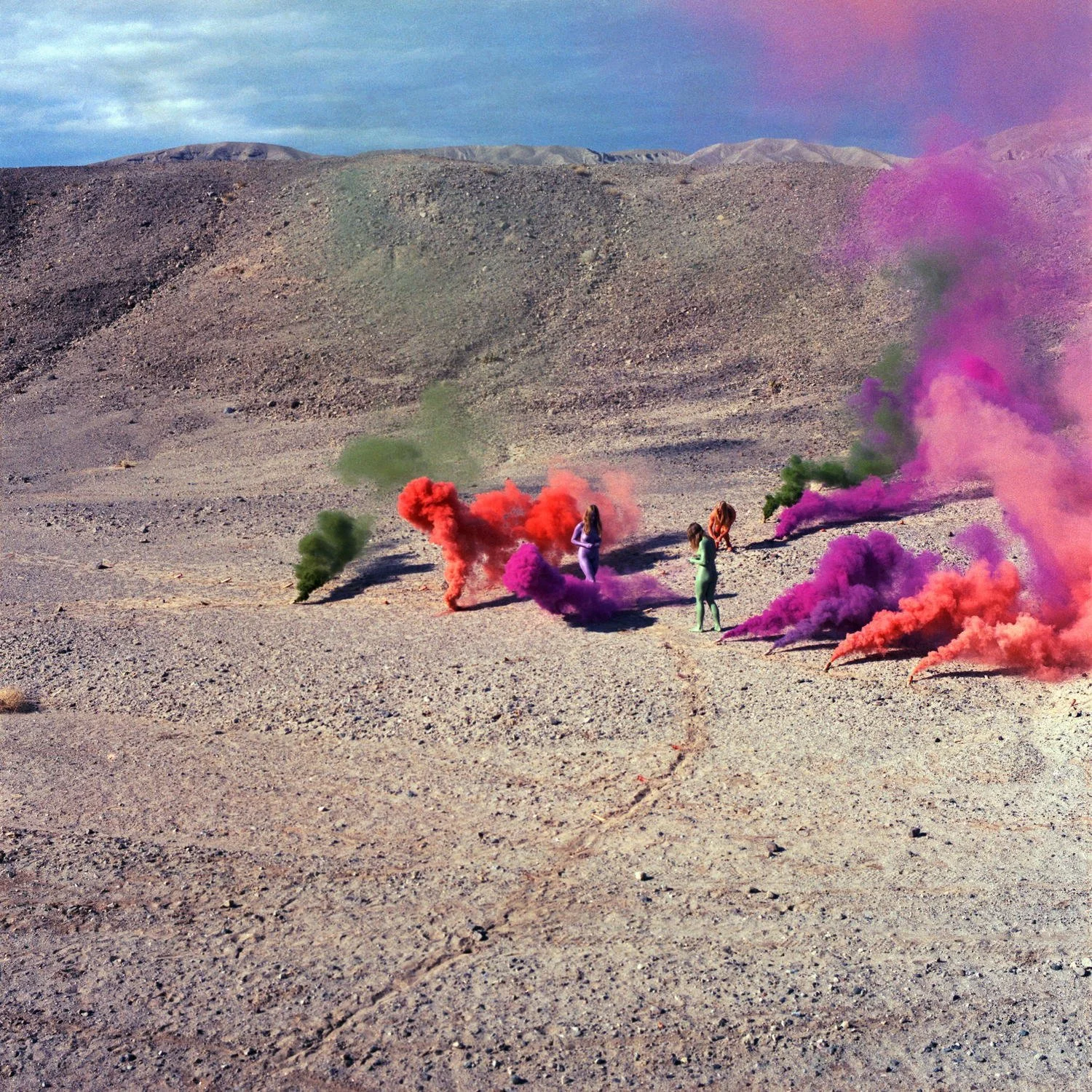
Judy Chicago, Smoke Bodies, from the portfolio On Fire, 1972 (performance); printed 2013, Inkjet print on paper documenting a site-specific pyrotechnic performance with fireworks and colored smoke flares, California desert, 16 × 16 in. (40.6 × 40.6 cm), Smithsonian American Art Museum, Washington, D.C.
Chicago’s Smoke Bodies reflects her broader commitment goal to feminist collaboration and visibility within art spaces that have historically excluded women. The work emphasizes, intimacy and shared By projecting connection and participation, Chicago challenges how museums traditionally display and value art. She is always fighting for more communal narratives. The smoke drifts into the vents and cracks of the building, "infecting" the museum from the outside in. In the context of this exhibition, the piece illustrates how feminist practices can reshape the museum from a hierarchical institution into a more open space.
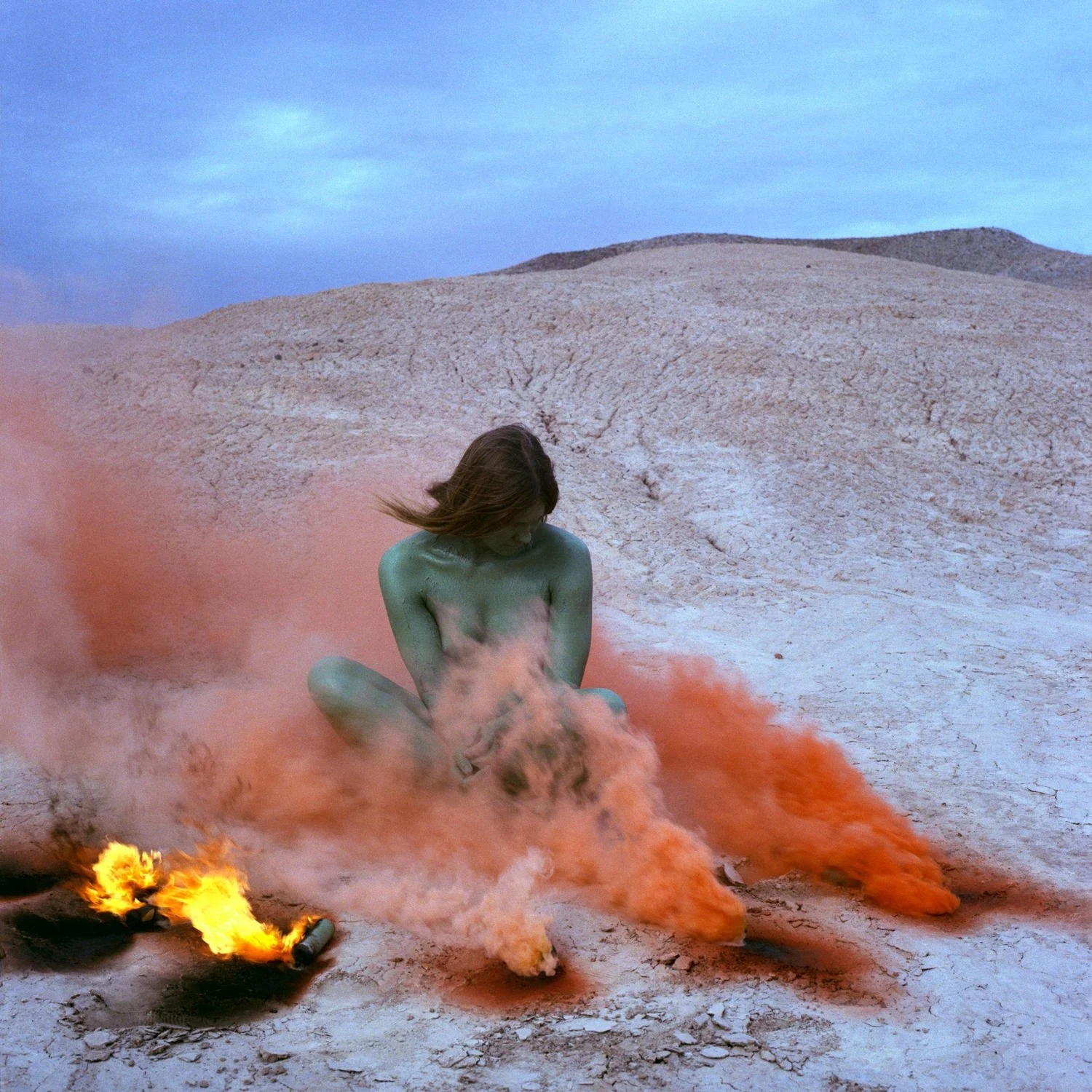
Judy Chicago, Smoke Bodies, from the portfolio On Fire, 1972 (performance); printed 2013, Inkjet print on paper documenting a site-specific pyrotechnic performance with fireworks and colored smoke flares, California desert, 16 × 16 in. (40.6 × 40.6 cm), Smithsonian American Art Museum, Washington, D.C.
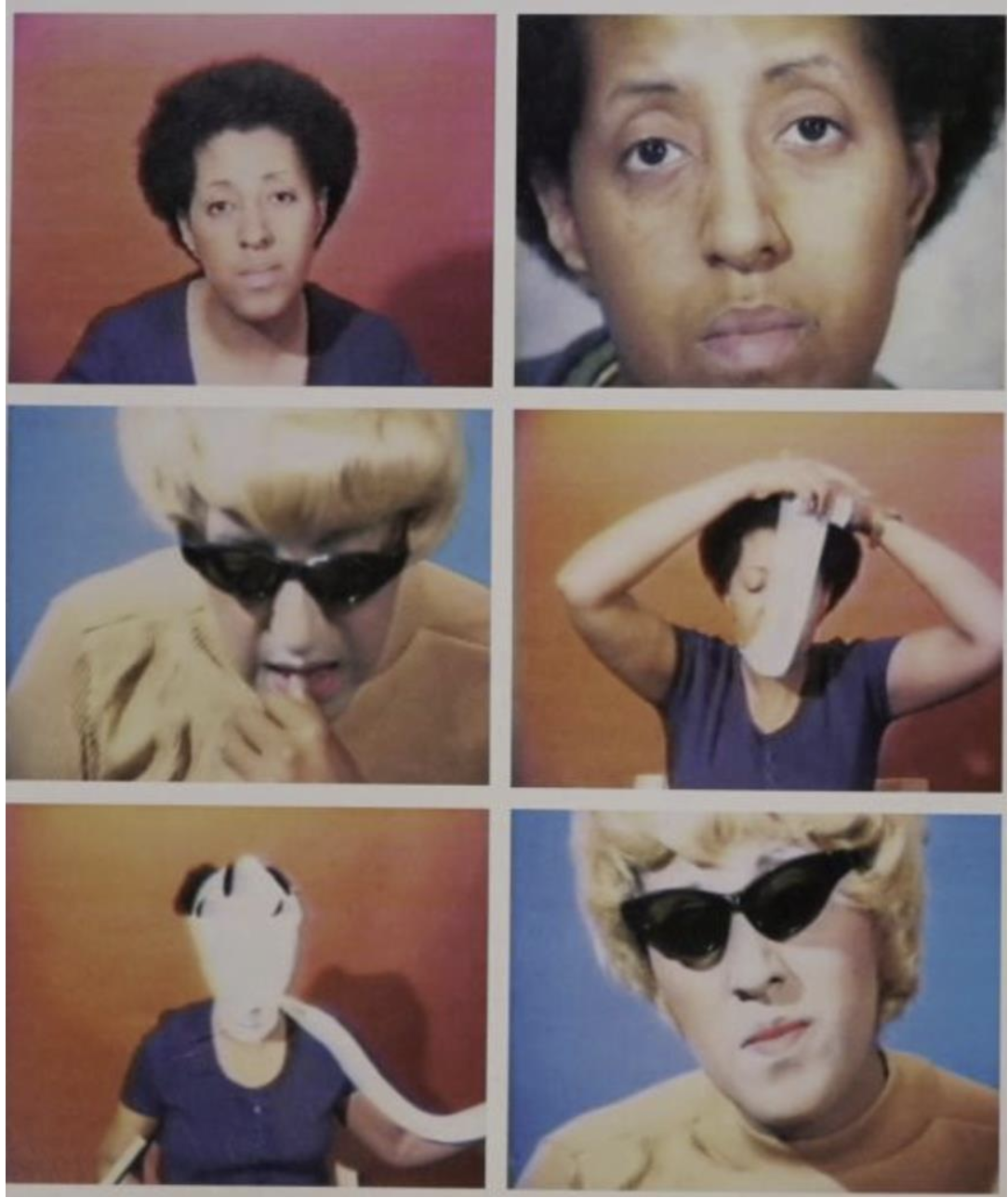
Howardena Pindell, Free, White and 21, 1980, Single-channel video, color, sound, 12 min., 15 sec, The Museum of Modern Art, New York
Pindell’s Free, White, and 21 confronts racism and sexism in both society and the art world. Through a split performance, she contrasts her lived experiences as a Black woman with a dismissive white persona, exposing how institutions invalidate marginalized voices. The work is especially significant in a museum context, where claims of neutrality often mask systemic exclusion, when one is silent about something they are often part of the problem. It powerfully illustrates how race and gender shape access to visibility, reinforcing the exhibition’s focus on both inclusion and the persistent erasure of certain narratives.
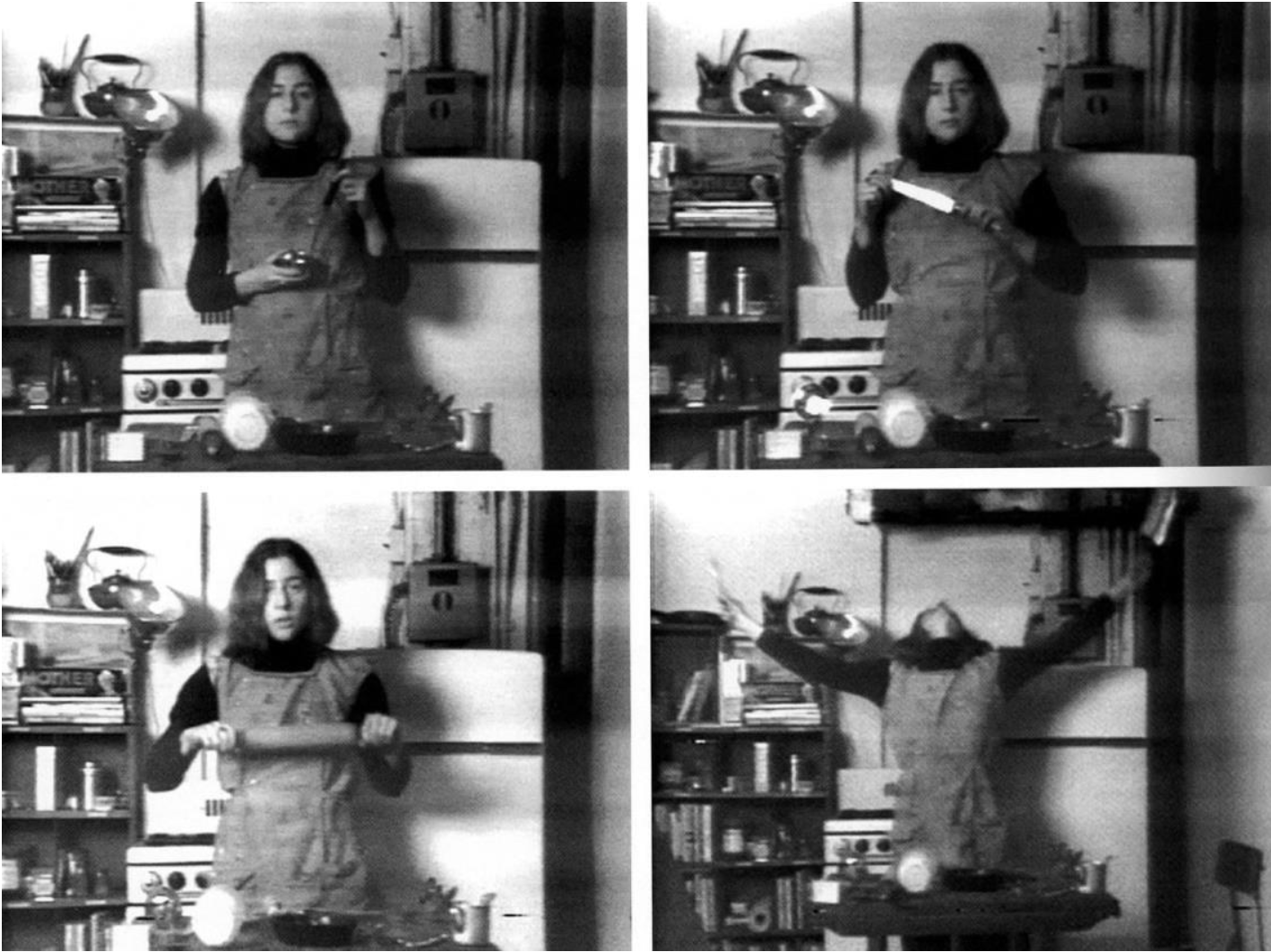
Martha Rosler, Semiotics of the Kitchen, 1975 Single-channel video, black and white, sound, 6 min., 9 sec, The Museum of Modern Art, New York
Rosler’s video performance critiques the ways language and domestic labor have confined women’s roles. By presenting kitchen tools alphabetically with increasing aggression, she exposes the frustration embedded in these expectations. Within the museum, the work challenges what is considered worthy of display. She brings every day gendered experiences into a space that has traditionally excluded them. It highlights how museums have historically ignored women’s labor and voices. In similar the belief that quilting, embroidery, are expertness seen as “women crafts.” This piece reinforces the exhibition’s focus on omission and the need to broaden institutional narrative.
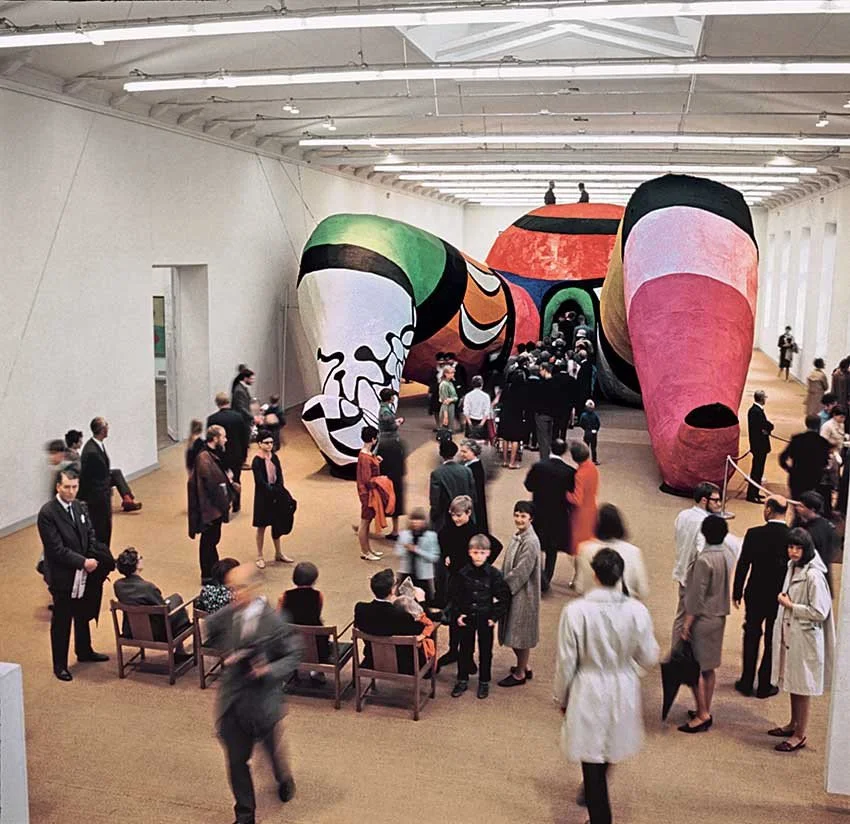
Niki de Saint Phalle, with Jean Tinguely and Per Olof Ultvedt, Hon – en katedral (She – A Cathedral), 1966 (June 4 – September 4, 1966), welded steel rebar, fabric, carpenter's glue, paint; incorporating cinema, bar, planetarium, children's slide, and interactive kinetic works, Approx. 28 m (92 ft) long × 23 m wide × 6 m (20 ft) tall; approx. 6 tonnes, Dismantled at close of exhibition per the work's conception. Surviving head preserved in the permanent collection of Moderna Museet, Stockholm
Hon transforms the female body into an immersive architectural environment, inviting viewers to physically enter the sculpture through the figure's vagina — effectively being birthed by her into the interior space. This radical reimagining of the body challenges its traditional objectification in museums, where women are often passive figures on display. Saint Phalle instead asserts the body as active, powerful, and generative. In relation to this exhibition, Hon critiques how museum spaces have historically controlled bodies, offering an alternative vision in which a woman's body takes up space — both literally and symbolically.

Norah is an Art History major with a minor in Gender, Sexuality, and Women's Studies, expected to graduate in Spring 2027. Her academic journey has taken her across three continents, completing study programs at both Temple University Japan and Temple University Rome, experiences that have deeply informed her global perspective on visual culture. Her scholarly interests center on performance art and the critical intersections between art history, feminist theory, and queer theory.