Living Circuits:
A System of Exchange
What happens when a plant is understood not simply as something to observe, but as an active participant in an artwork?
A new interdisciplinary installation in the Tyler School of Art and Architecture Atrium begins with that question. Bringing together living plants, sound, photography, sculpture, glass, horticulture, architecture and technology, the project transforms the Atrium into a shared environment for exploring how energy moves between biological systems, materials and people.
At the center of the installation is a simple idea: living organisms are constantly responding to the world around them. Plant-based sensors make some of that activity perceptible by translating subtle electrical changes within plants into sound. But the plants are not treated simply as instruments producing information for a human audience. They become participants within a larger system of exchange.
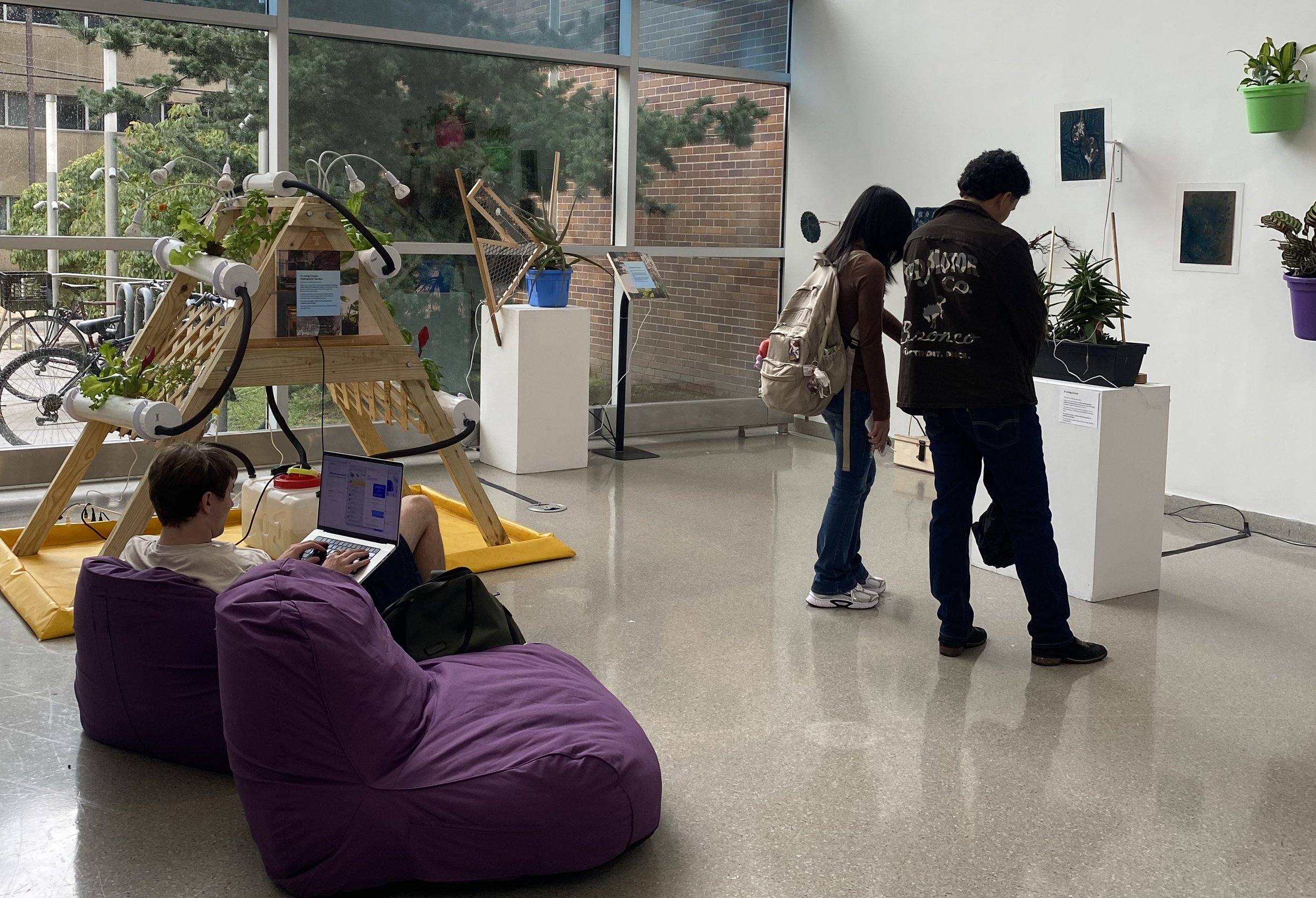
The result is deliberately difficult to attribute to one discipline. It is sculpture and sound, garden and instrument, classroom and experiment. Its strength comes from the points where those categories overlap.
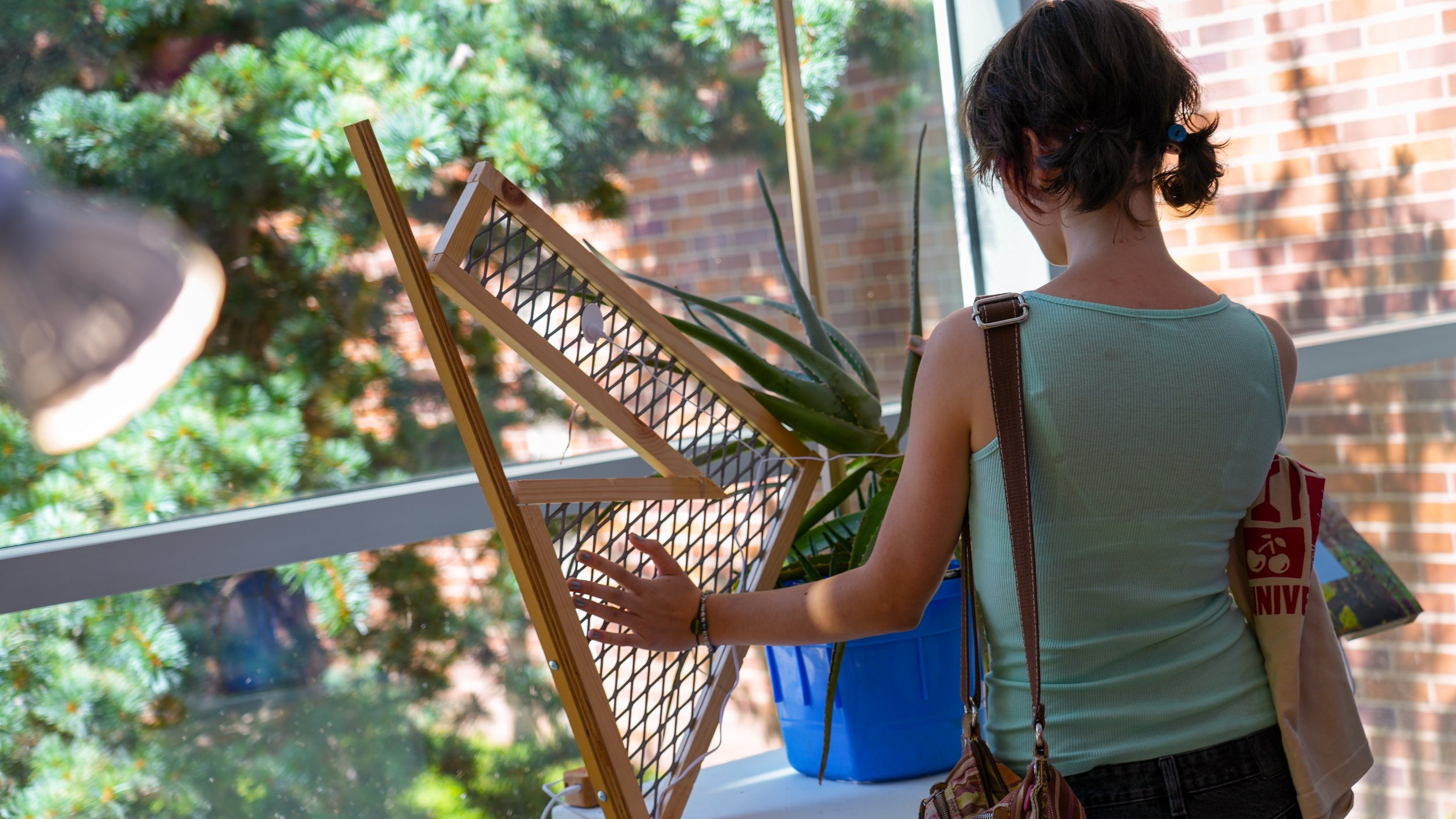
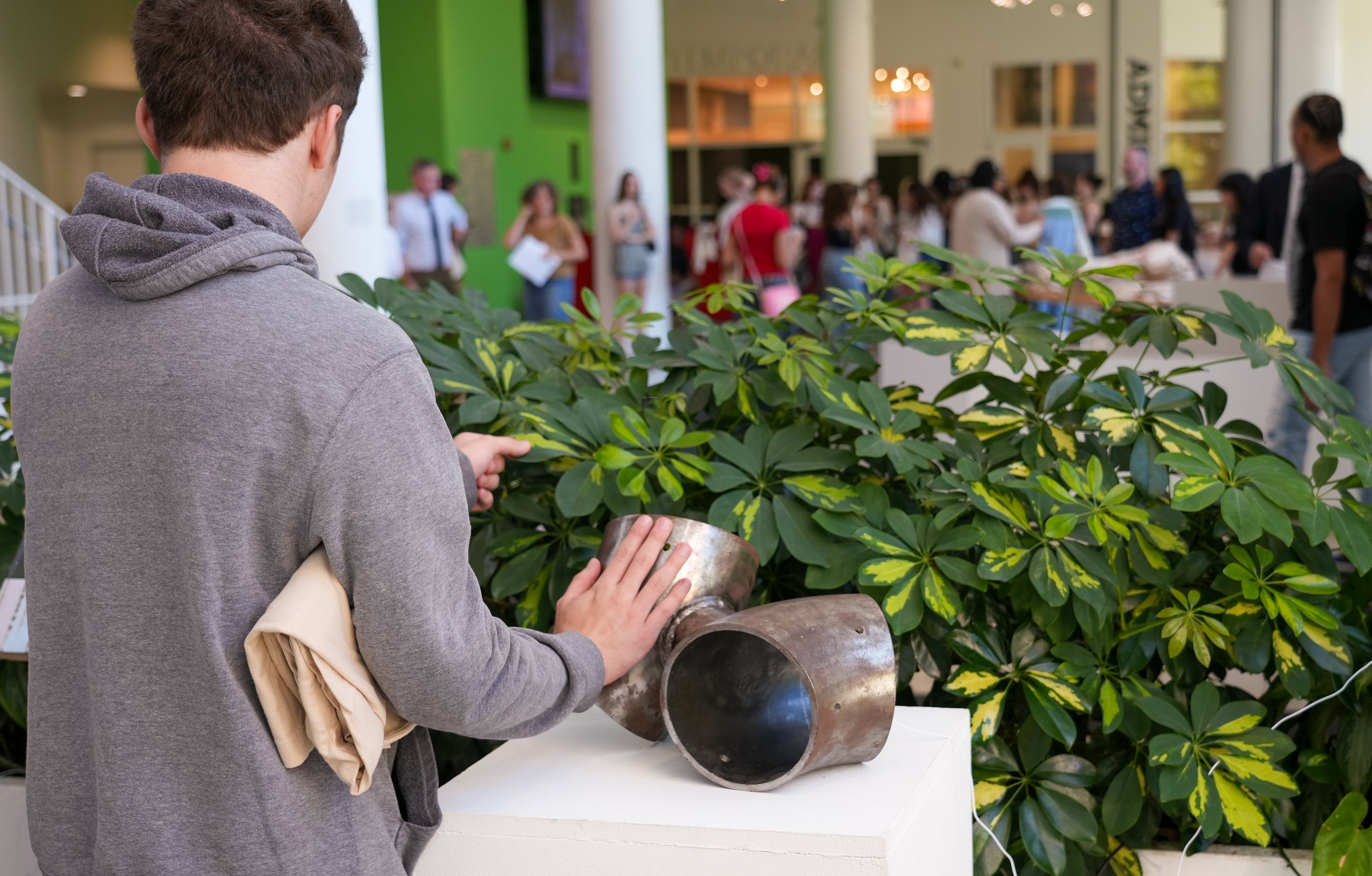
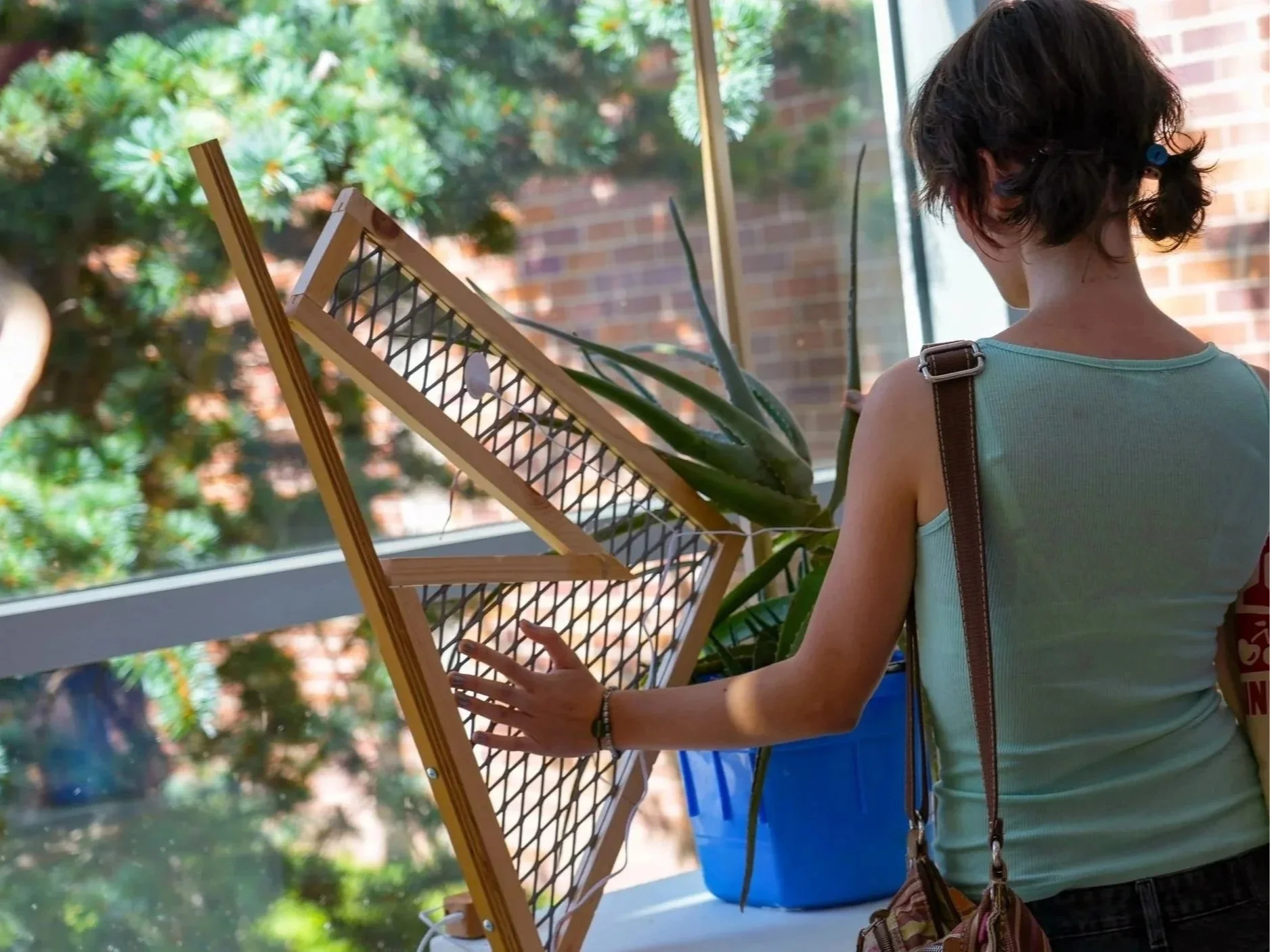
Throughout the Atrium, human interaction helps activate that system. Scraps of metal gathered from the Sculpture program have been incorporated into the installation as both conductive and sculptural elements. When visitors engage with these materials, their bodies become part of the exchange between the sensing technology, the plants and the resulting sound. Human touch activates the work, but does not entirely control it. Instead, the person and the plant temporarily enter the same circuit, each becoming a conductor through which energy can move.
The resulting sounds are therefore less like predetermined compositions and more like evidence of relationships taking place in real time. The plant, technology, conductive materials and participant all contribute to what is heard.
The project is led by Erin Boyle, Assistant Director of Academic Enrichment at Tyler, who conceived and coordinated the installation as part of a larger effort to establish a cross-disciplinary, sustainability-focused project at the beginning of each academic year. Building on the first two projects in this evolving series, which brought together visual language and sound, Boyle saw the Atrium as an opportunity to push that exchange further connecting disciplines that might not ordinarily make work together while creating something students encounter as they return to Tyler.
For Boyle, the collaboration is as important as the finished installation. Her role has been to pull together the people, ideas, materials and technologies that allow the individual contributions to operate as a larger whole. In addition to organizing the collaborations, she developed and fabricated the installation design and worked directly with the sensing and sound technologies, creating the physical and technological framework through which the contributions of Sculpture, Glass, Photography, Music, Architecture, Landscape Architecture and Sustainability could meet.
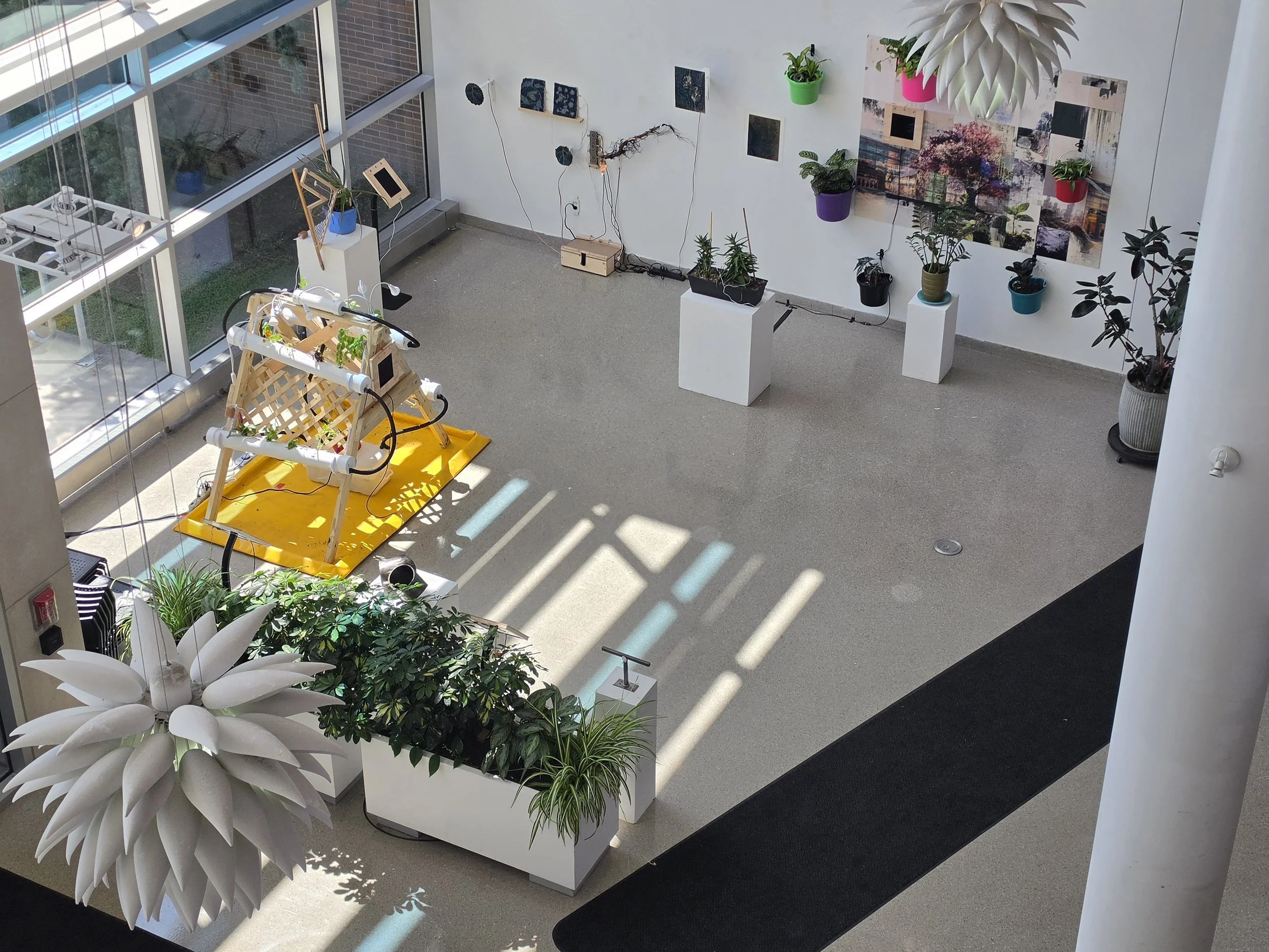
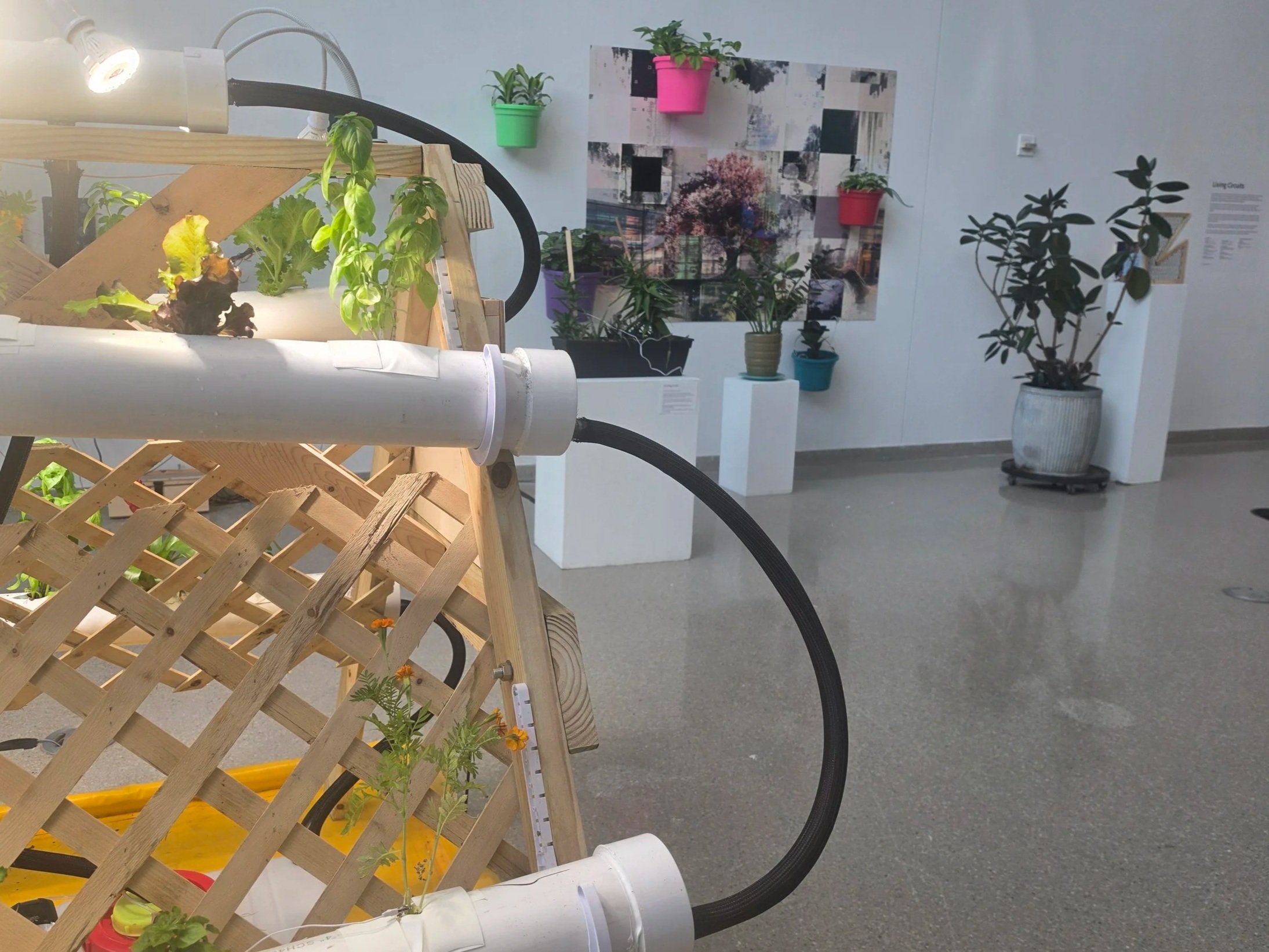
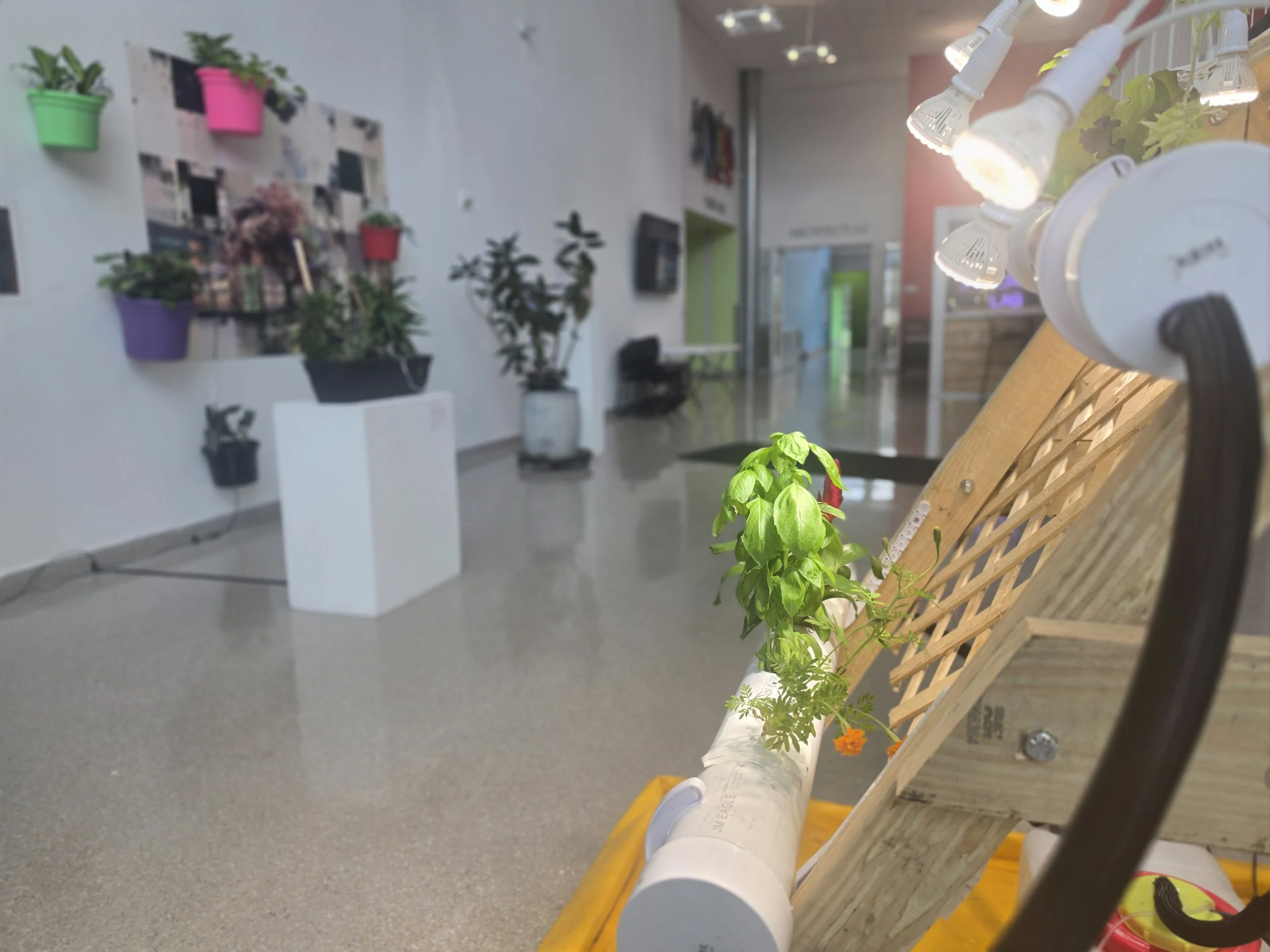
At the center of the Atrium, a freestanding hydroponic garden makes this idea of circulation physically visible. Sensors connected to the water extend the sensing system beyond individual plants and into the infrastructure that keeps them alive. Within the hydroponic system, a pump continually moves nutrient-rich water through the garden before returning it to the reservoir to be circulated again. The energy supplied by the pump produces movement; the moving water carries nutrients to the plants; the plants respond to their environment; and those living processes become part of the installation’s sonic network.
Water, in this sense, becomes both a necessity and a visible carrier of energy.
The continuous circulation is functional, but it also becomes a metaphor for the project as a whole. Energy does not travel in a single direction from person to plant or plant to machine. It is transferred, redirected and returned. Water circulates. Electrical signals fluctuate. Human bodies conduct. Sound moves outward into the architecture. Each part of the system affects what comes next.
That cycle is made even more significant by the history of the hydroponic structure itself.
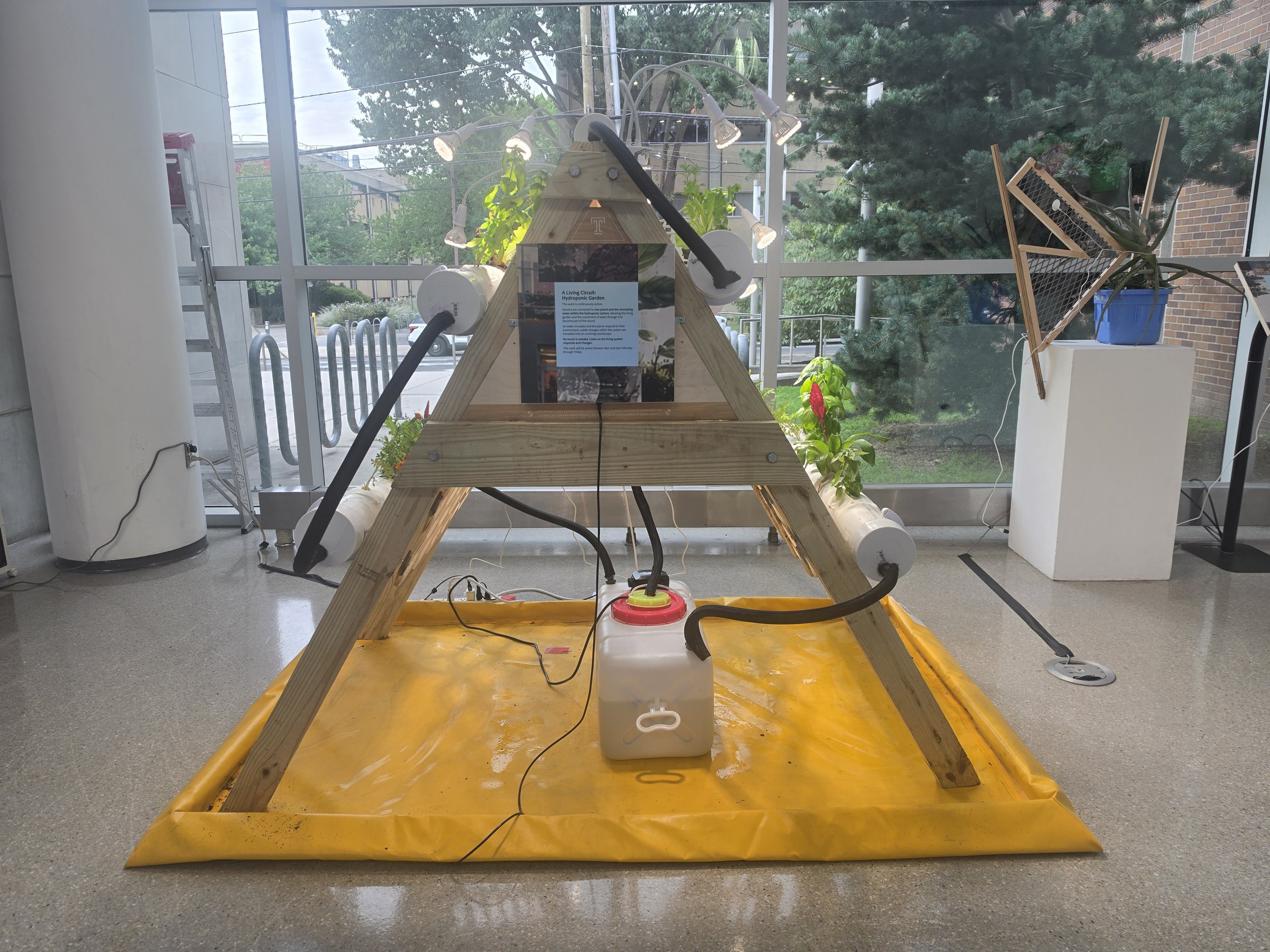
The system was originally created as a Sustainable Hydroponics Display for Charles Library, designed and constructed by student leaders from Engineers for Climate Action with support from an Office of Sustainability Green Grant. Its original purpose was educational and practical: to demonstrate how nutrient-rich water can replace soil in a recirculating growing system, greatly reducing water use while making urban agriculture possible within a relatively small footprint. The project also considered hydroponics as a potential tool for addressing larger concerns around sustainable food production and food insecurity.
When the students responsible for the original Green Grant graduated, the physical system remained. Rather than allowing the end of one student project to become the end of the object, this group saw an opportunity to give it another life.
The hydroponic structure has now moved from the library into the Tyler Atrium and from one educational context into another. Its original function has not been erased; it has been extended. It still grows plants. It still demonstrates the movement and reuse of water. But now it also generates sound, participates in an artwork and becomes a meeting point for students and faculty working across art, design, music, technology and environmental studies.
This act of reuse introduces another dimension to the project's understanding of sustainability. Sustainability is not represented only through plants or discussed as an abstract environmental goal. It becomes part of how the project itself is made.
A structure developed by one group of students becomes material for another group to investigate. An object created for one purpose is adapted rather than discarded when that purpose ends. Knowledge, equipment and materials remain in circulation.
And the cycle will continue after the Atrium installation comes down. The hydroponic garden will become a resource for Tyler's alternative photographic printing processes and an extension of the school's natural dye garden, growing plant material that can be harvested and used by students in future classes. What began as a student-led sustainability project, then became part of an interdisciplinary installation, will take on another life as a working resource for experimentation with plant-based dyes, alternative image-making and environmentally responsive processes.
The hydroponic garden therefore begins another kind of generative cycle: build, use, learn, adapt and return. Its reuse asks what might happen if university projects were understood not as isolated events with fixed endings, but as resources capable of accumulating new purposes, collaborators and meanings over time. In this model, the end of an exhibition is not the end of the project. The plants continue to grow, materials continue to circulate and one creative investigation generates the resources for another.
That same spirit of transformation can be seen throughout the Atrium.
Within Sculpture, the project grew from an existing plant-wall concept near the entrance to the program area. Rather than simply relocating that work, the original idea became a point of departure. Its underlying purpose, the integration of plant life into a sculptural and architectural environment remained, while its physical form changed in response to the scale, circulation and public character of the Atrium. Sculpture also contributed discarded metal from the studios, allowing remnants of previous making processes to become active components in a new conductive system.
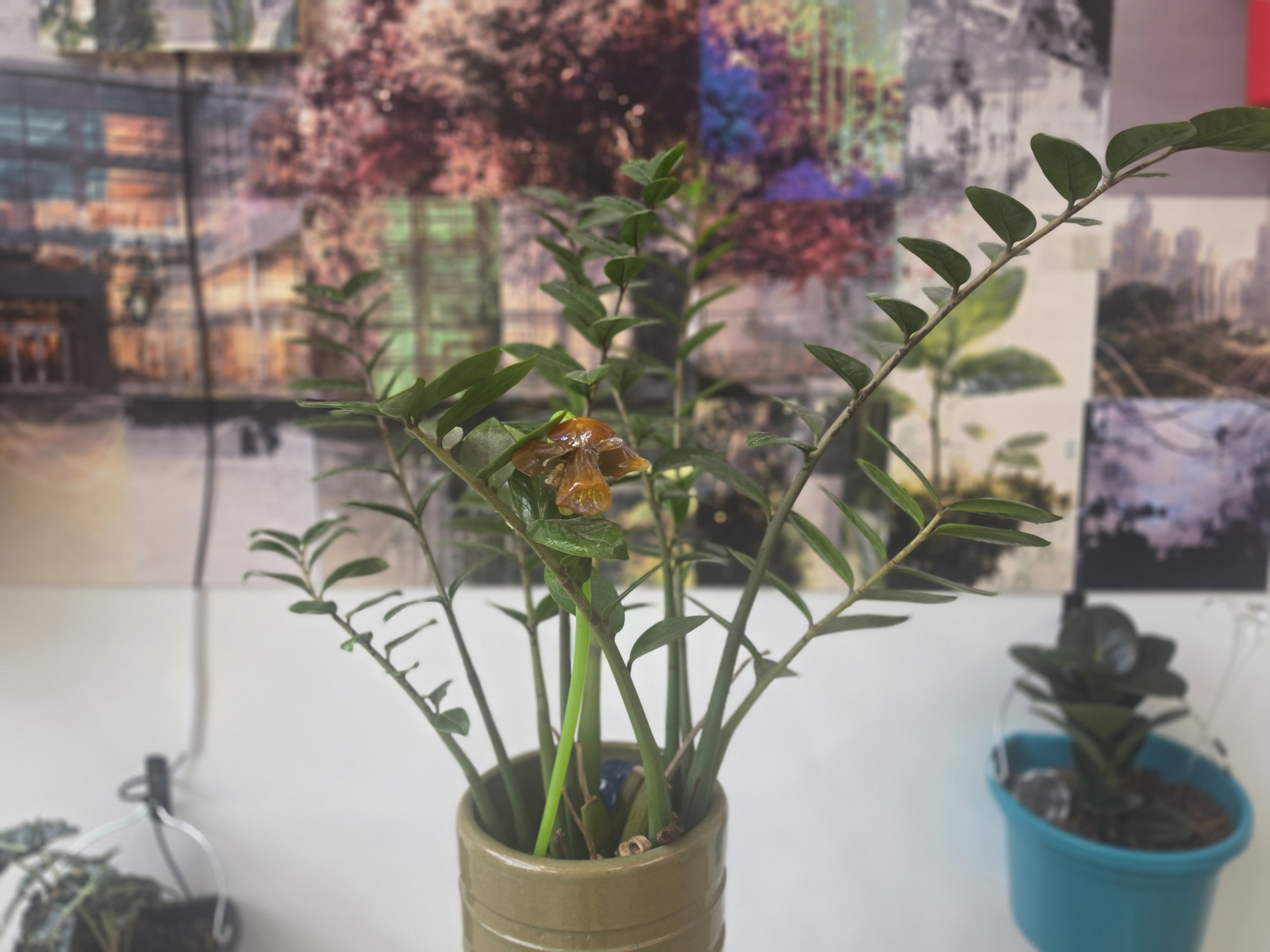
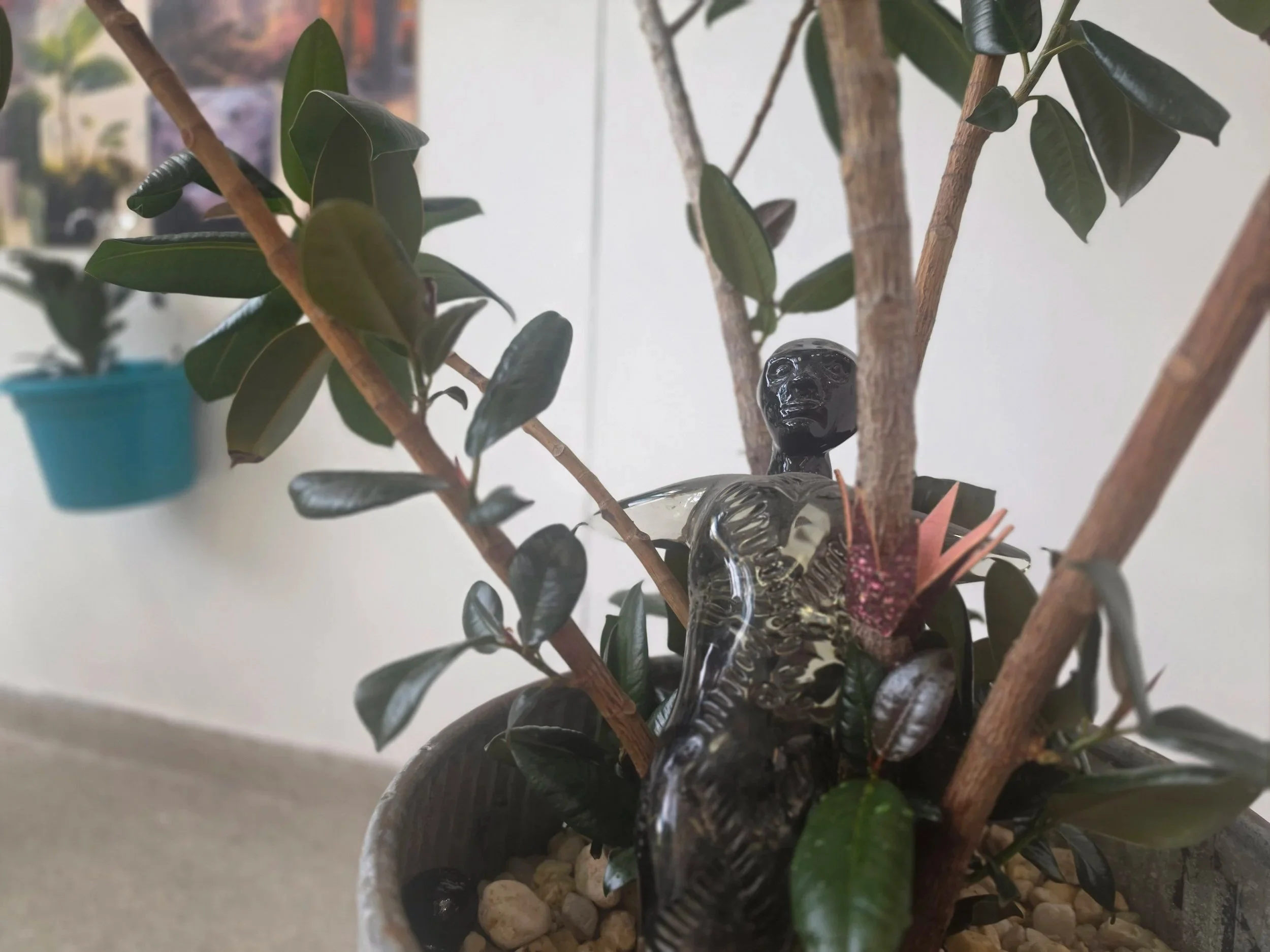
Glass introduces another material language through blown glass objects and sculptural forms positioned in relationship to plants, water and light. The transparency and reflective qualities of glass create moments where living and fabricated materials visually overlap. Blown forms exist alongside growing plants, reused materials and technological components, further complicating the boundary between what is organic, fabricated and technologically mediated.

Photography expands the project in another direction. Laurie Beck Peterson, Adjunct Faculty in Photography at Tyler School of Art and Architecture, brings alternative and plant-based photographic processes already being explored within the Photography program into conversation with the living installation. Peterson's work includes cyanotype and other historical photographic processes that foreground light, time and material transformation.
Rather than functioning simply as documentation of the installation, these photographic works participate in the same questions. Plants, water, light and organic matter become materials through which images and information can be produced.
Alongside Laurie Beck Peterson's cyanotypes, Sandra James, Senior Systems Administrator and Adjunct Faculty in Music Studies and Music Technology at the Boyer College of Music and Dance, uses Pocket SCÍON technology to explore the electrical activity of living material through sound. James' work and teaching already move between electronic music, analog and modular synthesis and experimental performance, making this collaboration another way to consider biological information as performative material.
In her first interactive botanical synthesis project, Plants and Processes (2022, Temple University, Rock Hall Auditorium), Sandra used the INSTRUŌ SCÍON Eurorack module to commune with a small aloe while a colorful large-scale mashup video of plants and high-end audio tech was projected behind the two performers. One probe from the SCÍON module was attached to the succulent while Sandra held a second probe. The module connected the duet, allowing their bioelectric fields to interact. Various signals derived from the interaction were sent as CV (Control Coltage) to other modules to produce electronically synthesized and processed sounds. When one performs with a plant, is it listening and modifying the signal that it sends to change the vibrations that it feels? There is something to contemplate and experiment with here!
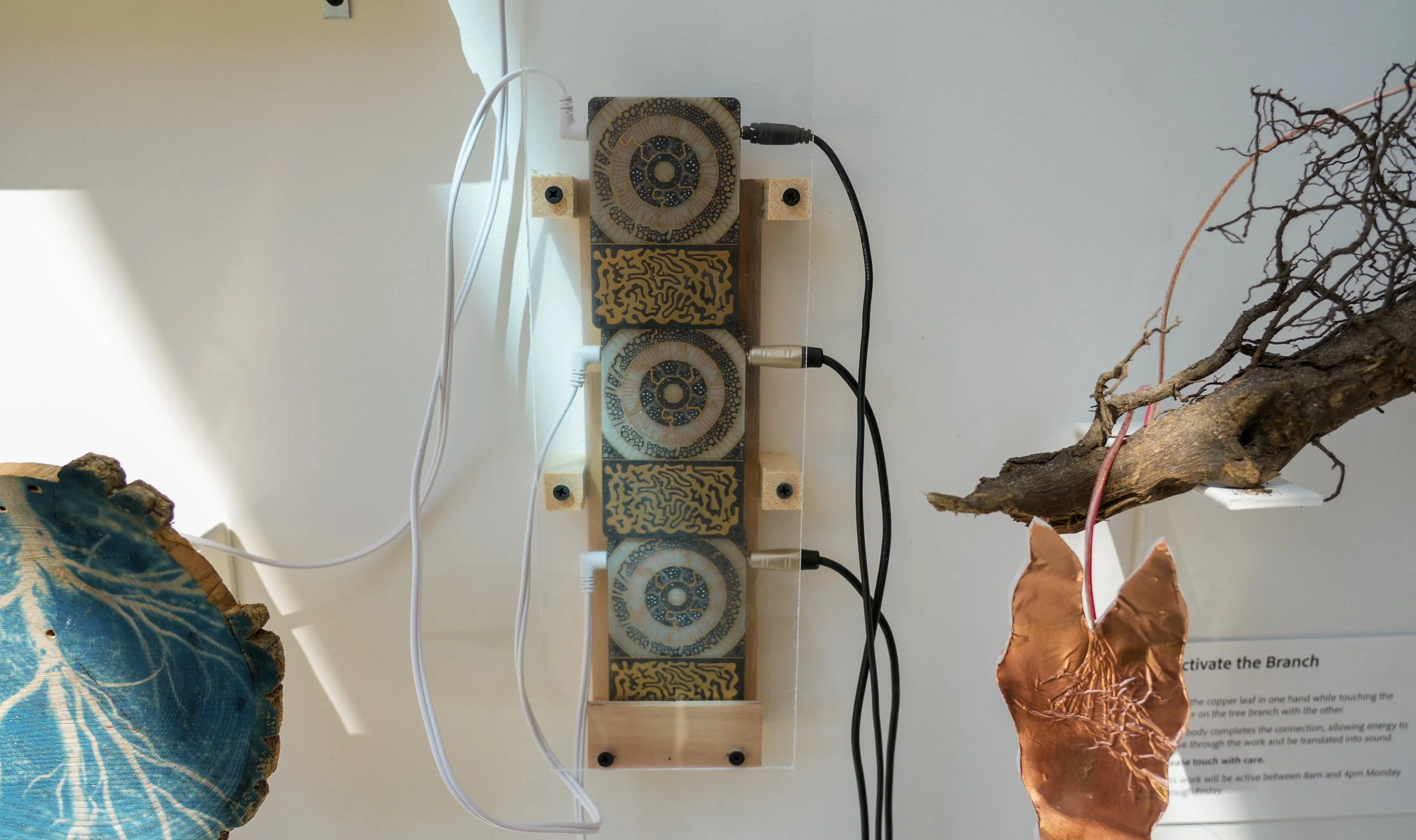
The POCKET SCÍON used in the installation, and in Sandra’s Analog and Modular Sound Synthesis course (MUST 3763 / MUST 8480) at Boyer College, is a portable synthesizer with black and gold artwork inspired by mycelium in a petri dish above a touch plate. It includes a smooth probe that bypasses the touch plate. It has 4 audio programs with up to 5 voices each and can power headphones or send the signal to an amp. The instrument can send out MIDI and OSC signals to extend its capabilities, and it is programmable via buttons on the back as well as an App.
The instrument functions using a galvanometer to take the reading from living organisms. The galvanometer detects the presence and flow direction of a weak current. We are not listening to the actual sounds of the plant, mycelium, or human, but instead, to the changes in the periodicity of a pulse wave that is generated by a 555 timer and modified by the tiny biological changes. The more variability in the electrical field, the more variable the sounds will be.
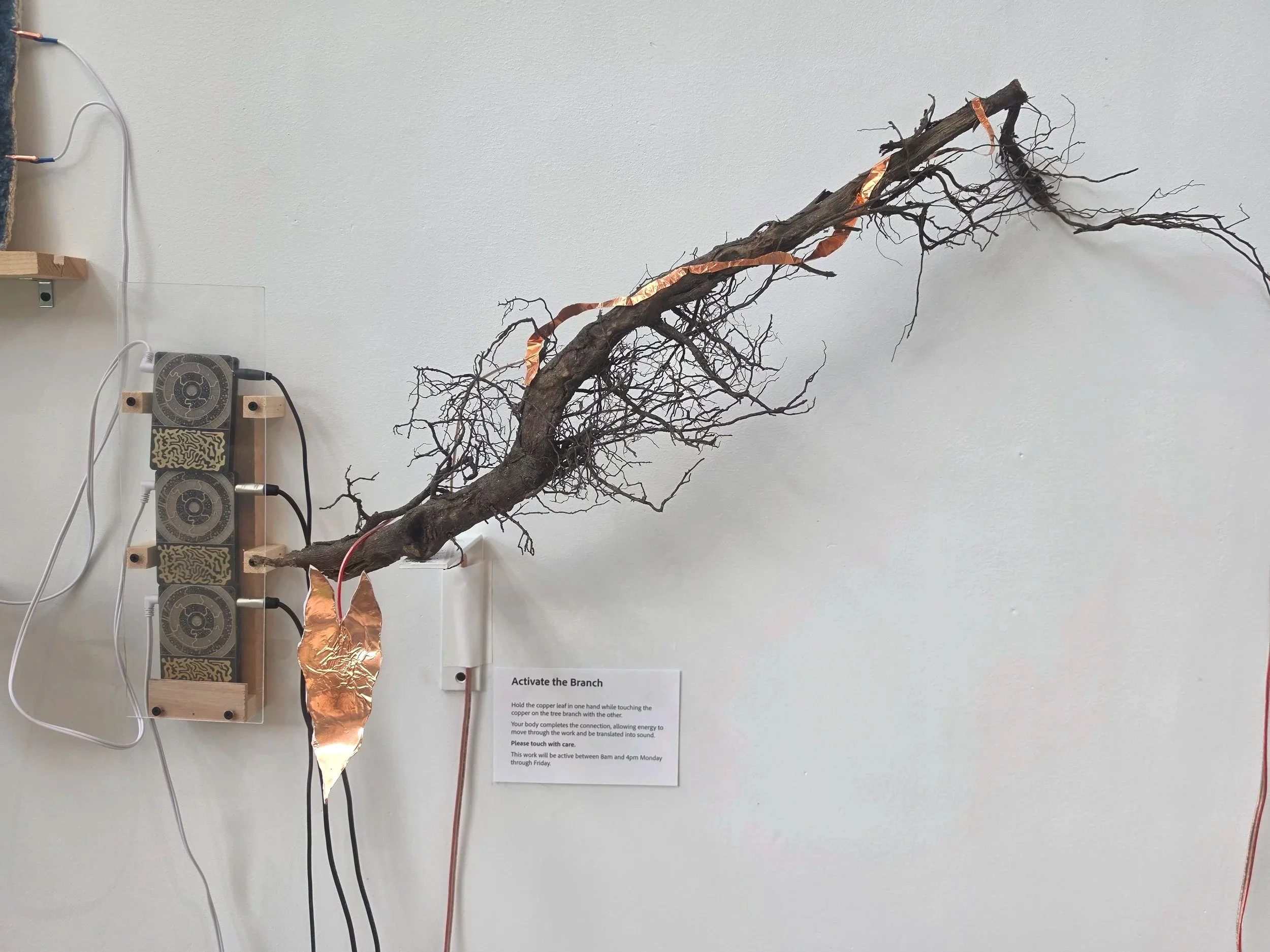
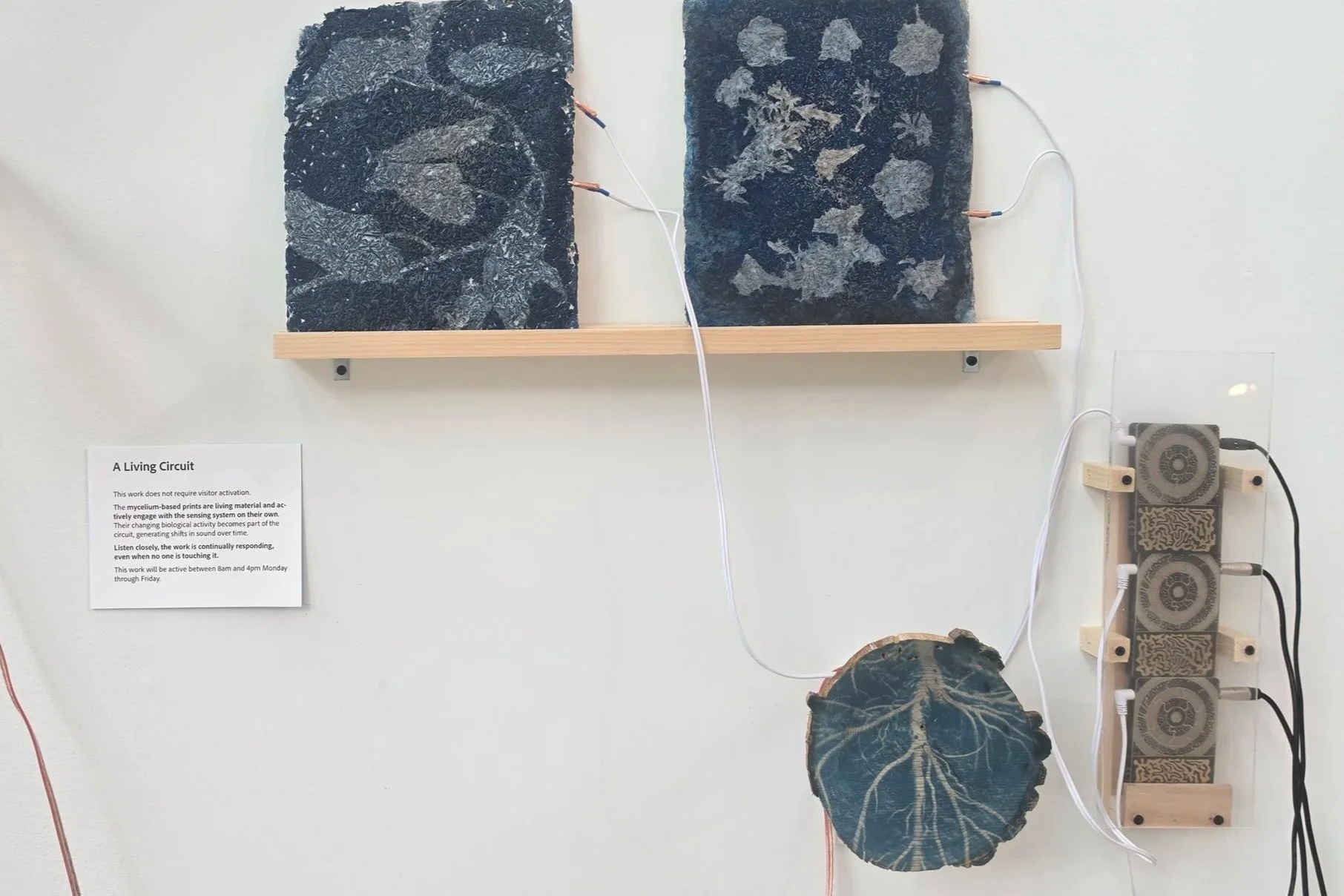
The sound program chosen to highlight the mycelium images by Laurie is called Soil Circuits. It uses a fully chromatic scale, has a thundering part, and sounds like a moist trip into nature. In this setup, the changing bioelectric field inside of the mycelium images goes through the POCKET SCÍONs and which measures the changes, sends them to the Soil Circuit voice, and gets amplified into a transducer speaker attached to the back of the root prints on the tree cross-sections. Similarly, the root with the copper probes of the leaf and tap root combines the bioelectric activity of the person touching both parts with whatever remains in the root as it dries. The bioactivity injected by touching the probes is measured and processed through the POCKET SCÍON to activate the transducer speaker on the large blue plant print suspended on the wall. The three beating hearts of the POCKET SCÍONs can be observed in their plexiglass housing as they measure and react to the mycelium and human touch.
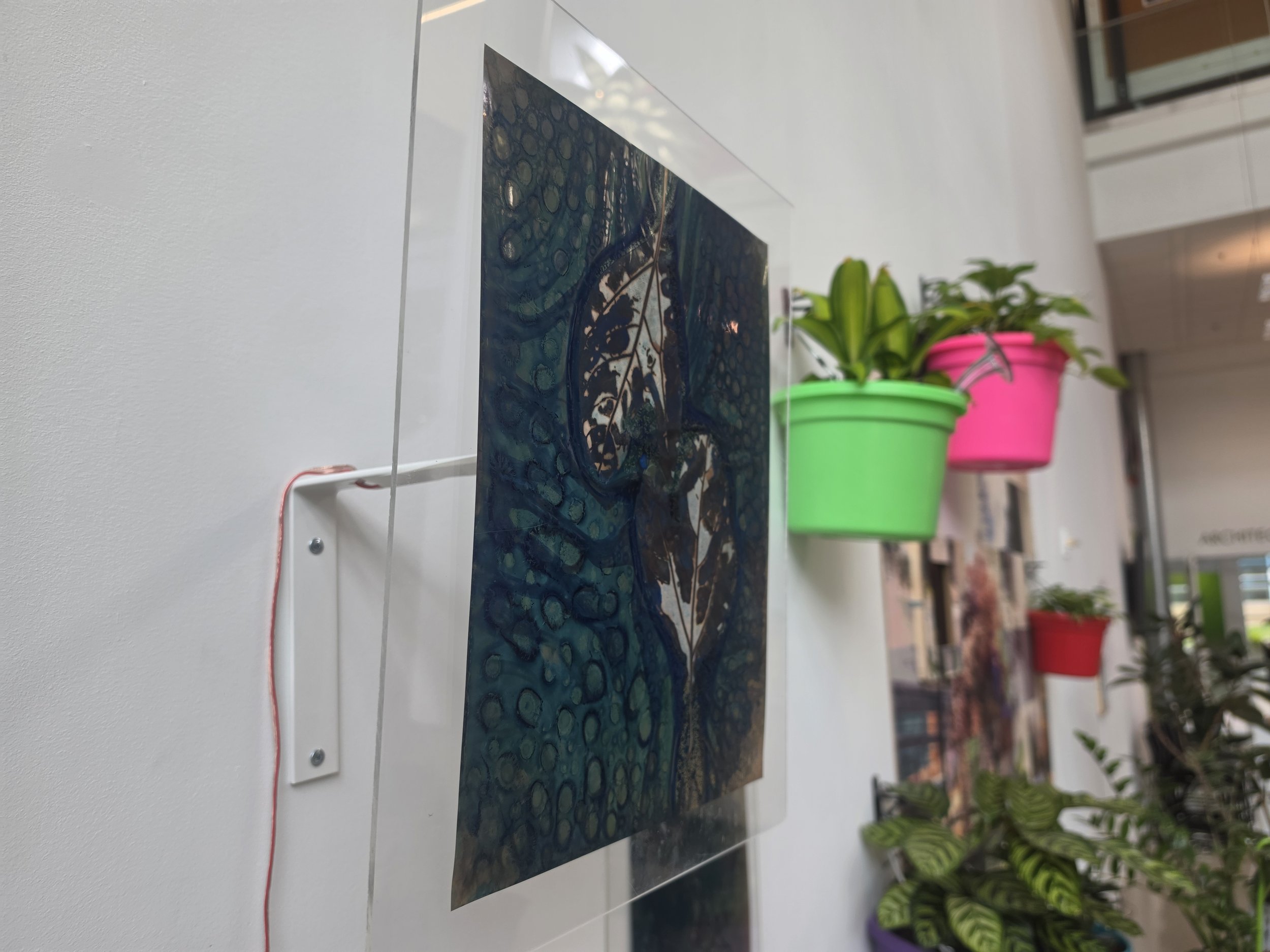
The cyanotype on ash wood and mycelium-based works ask, “What happens when an artwork is not only made from the remnants or products of living systems, but remains entangled with their ongoing activity?”
Light, water, time and chemistry activate the cyanotype process, while ash wood and mycelium bring their own material histories and biological relationships into the work. Together, these elements shift photography beyond representation and toward a process of exchange, transformation and response.
The two cyano-phytograms mounted on the wall extend this exchange. Made with plant-based developers grown in a hydroponic garden system like the repurposed hydroponic system used in the exhibition, and printed on expired ortho-lith film that might otherwise enter the waste stream, they connect photographic experimentation to cycles of growth, reuse, and sustainability.
Like the living circuits throughout the installation, these works are not simply representations of natural systems. They participate in them allowing material, organism and environment to remain active contributors to the work.
Through the Boyer College of Music and Dance, sound becomes not simply an output of the installation but a form of performance and collaboration. A plant can initiate a sound; a performer can respond; human contact can alter the system again. Composition becomes less about imposing a predetermined sequence and more about listening and responding to what another organism contributes.
The project's living components are equally dependent on knowledge from Horticulture at Temple Ambler, Landscape Architecture and the Temple Office of Sustainability. Their involvement grounds the installation in the practical realities of plant care, growing conditions, water circulation and sustainable systems.
Students have been central to that development. Liv Rogers, graduate student in Architecture, and Steph Haynesworth, an undergraduate student in Landscape Architecture, helped consider how the installation occupies the Atrium, not simply as a collection of individual objects, but as an environment. Their contributions brought attention to circulation, plant placement, spatial relationships, sightlines and the ways visitors physically encounter the project.
The Temple Office of Sustainability has been an essential partner, particularly in giving the hydroponic system its next life. Alejandro Sanoja, Zero Waste Specialist with the Office of Sustainability and a Class of 2027 Ecology, Evolution and Biodiversity major, brings to the project a practice already rooted in thinking about what happens to materials after their initial use. As a senior, Sanoja helps lead Temple's Zero Waste program, collecting materials including ink, toner and 3D-printer waste for responsible recycling. He also works with the Departmental Compost Program, collecting compostable material from university staff and bringing it to the Temple Community Garden compost pile.
That work provides an important parallel to what is happening in the Atrium. Recycling is not only about removing waste responsibly; it can also mean recognizing when something still has value and finding the next system in which it can participate. The hydroponic display embodies that philosophy. A student-designed project completed one cycle at Charles Library and, rather than becoming waste when its original creators graduated, entered another cycle of use, experimentation and learning at Tyler.
Special thanks are also due to Rebecca Collins, Director of Sustainability, and Bryce Forys, Sustainability Coordinator, whose continued partnership with Tyler has helped make this and other collaborative sustainability efforts possible.
Together, these collaborations have transformed the Atrium into something that sits between artwork, garden, instrument and classroom.
The installation does not ask visitors to see technology as separate from nature. Instead, technology becomes one more material through which relationships that already exist can be noticed. Electrical signals move through plants. Water continuously circulates. Human bodies conduct energy. Metal carries a signal. Sound travels outward through the architecture.
No single element creates the work on its own.
The plant is participant.
The visitor is participant.
The water is moving.
The material carries a history.
The system is always changing.
In this sense, the installation proposes a model not only for interdisciplinary collaboration, but for how a university community might think about making itself. Rather than one discipline illustrating the work of another, Sculpture, Glass, Photography, Music, Architecture, Landscape Architecture, Horticulture and Sustainability operate as parts of an interconnected system. Each brings a different form of knowledge. Existing materials are reconsidered rather than discarded. Previous projects become starting points for new ones. Students work alongside faculty and staff, and an installation created for the beginning of one academic year can generate possibilities for the next.
That continuing cycle is central to Boyle's larger goal for the project: to make the beginning of each school year an opportunity for a new group of people, disciplines and ideas to come together around sustainability, experimentation and collective making. The work in the Atrium is therefore both an installation, an invitation, and an example of what can happen when the boundaries between programs are made more porous.
Faculty, staff and students interested in contributing to or developing the next cross-disciplinary project are encouraged to reach out to Erin Boyle, erboyle@temple.edu. The next iteration does not need to reproduce what exists now. In fact, the goal is the opposite: to allow each year to bring forward different materials, questions, technologies and collaborations while carrying knowledge from one project into the next.
Like the water moving through the hydroponic garden, the intention is for the energy invested in one project not to stop when that project ends.
It circulates. It changes form. And it becomes the beginning of something else.
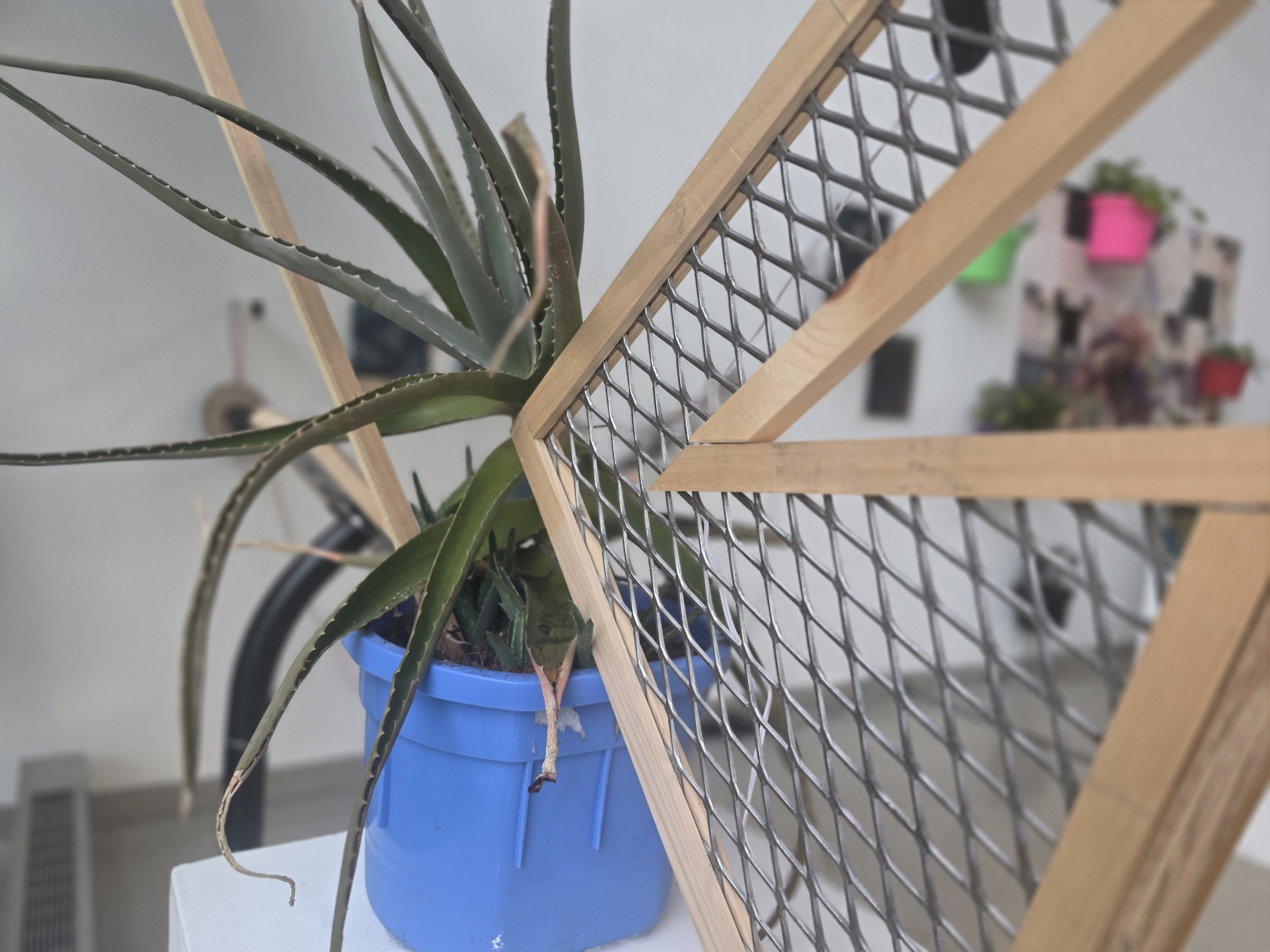
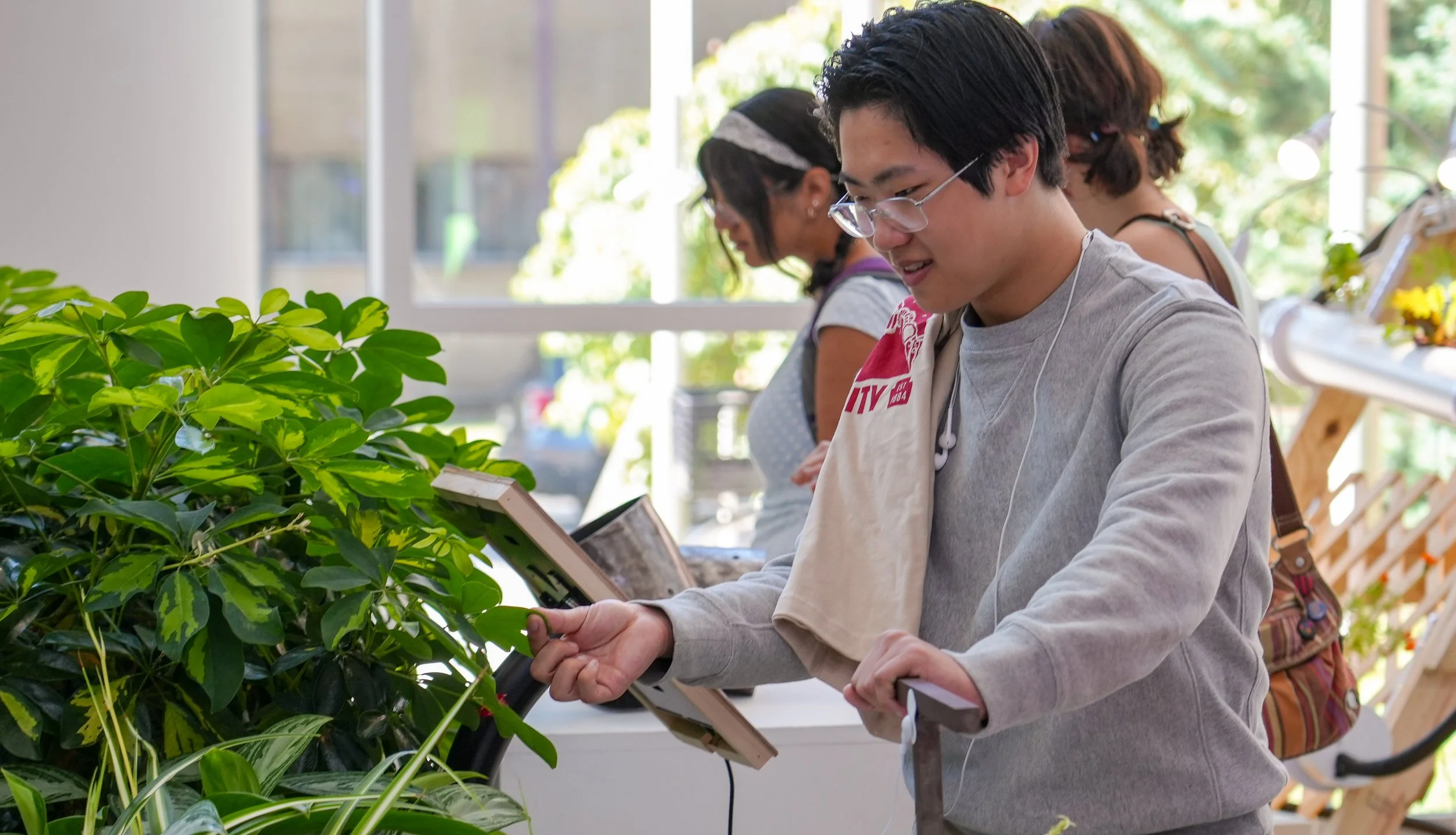
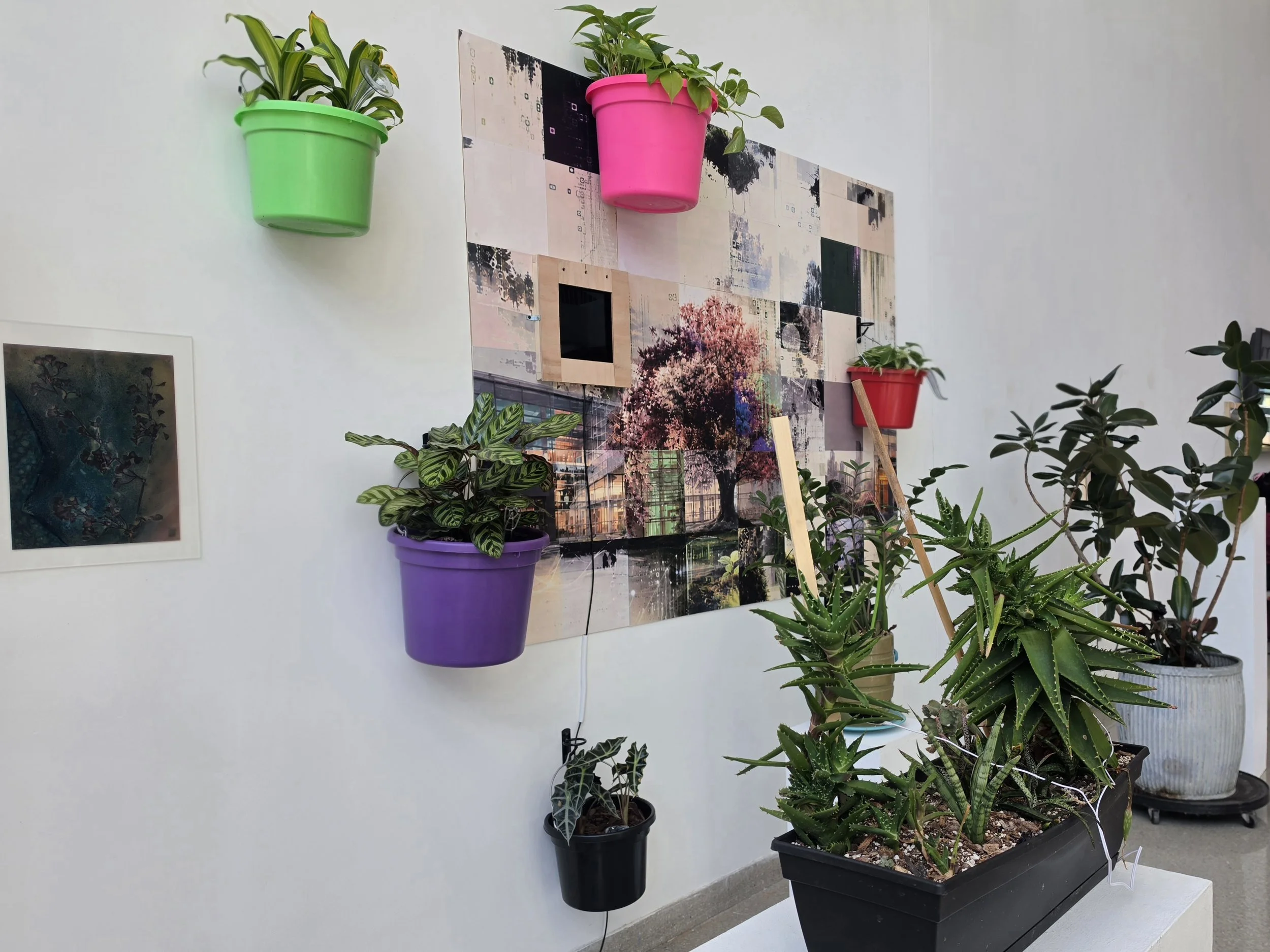
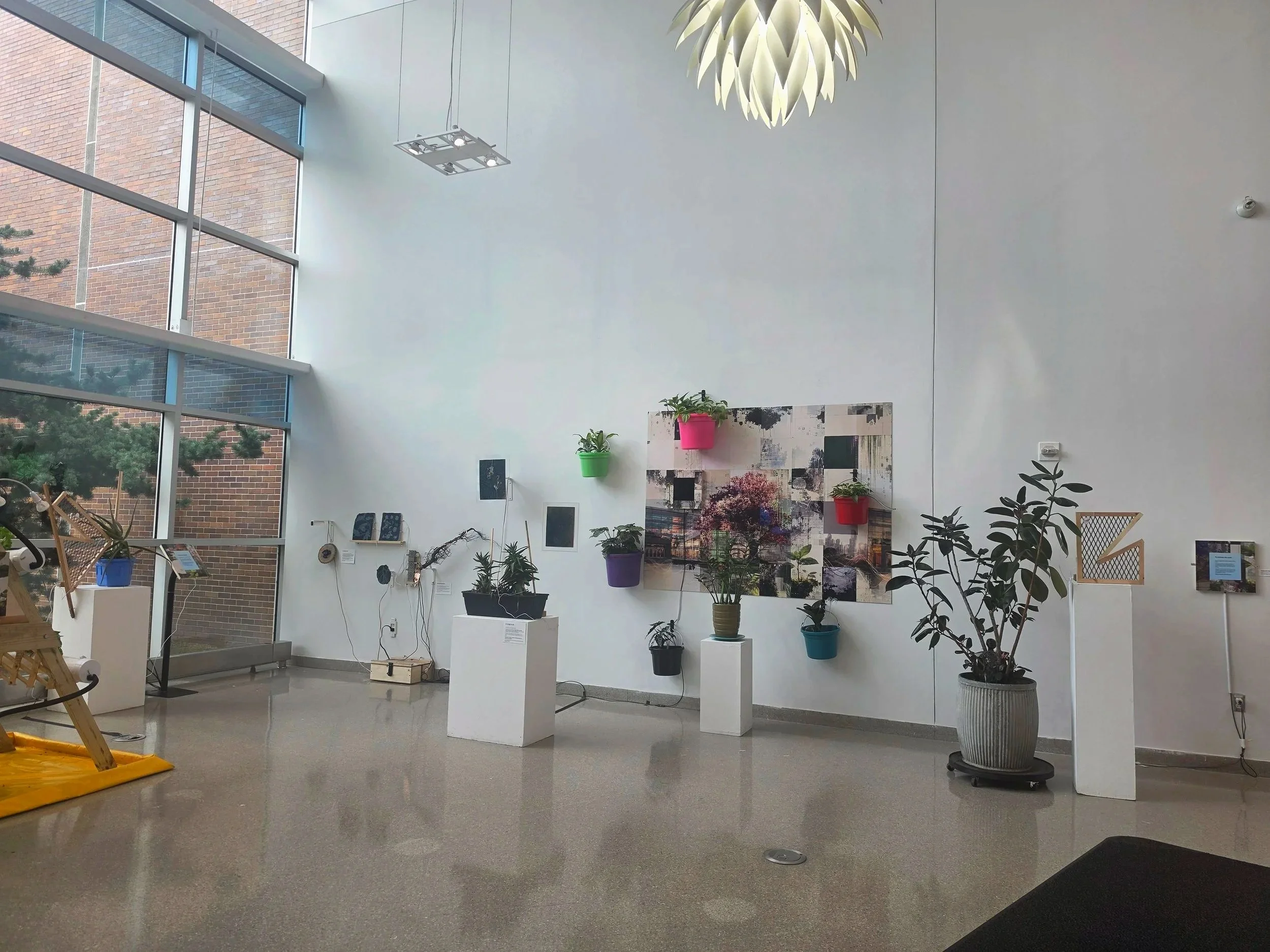
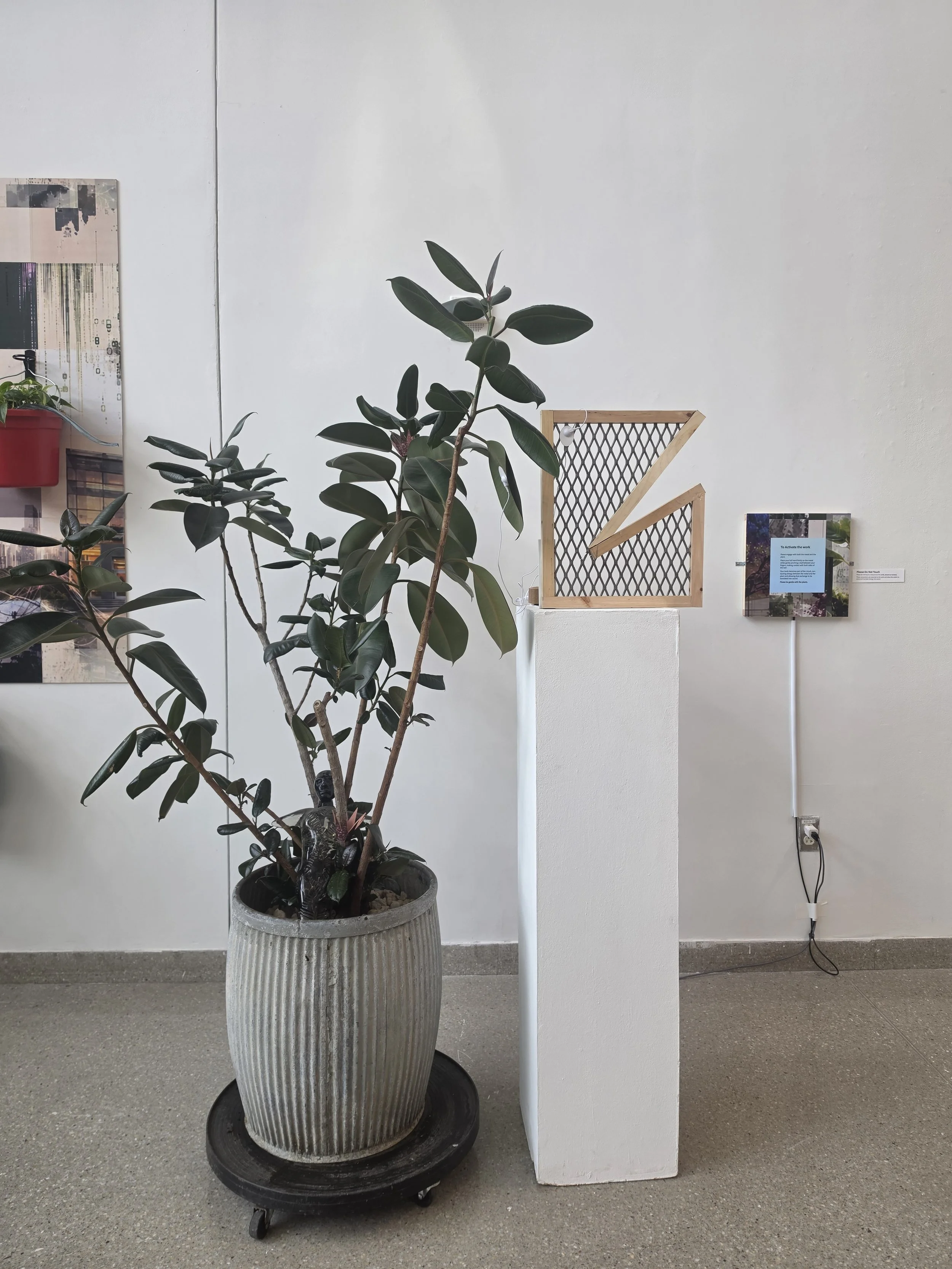
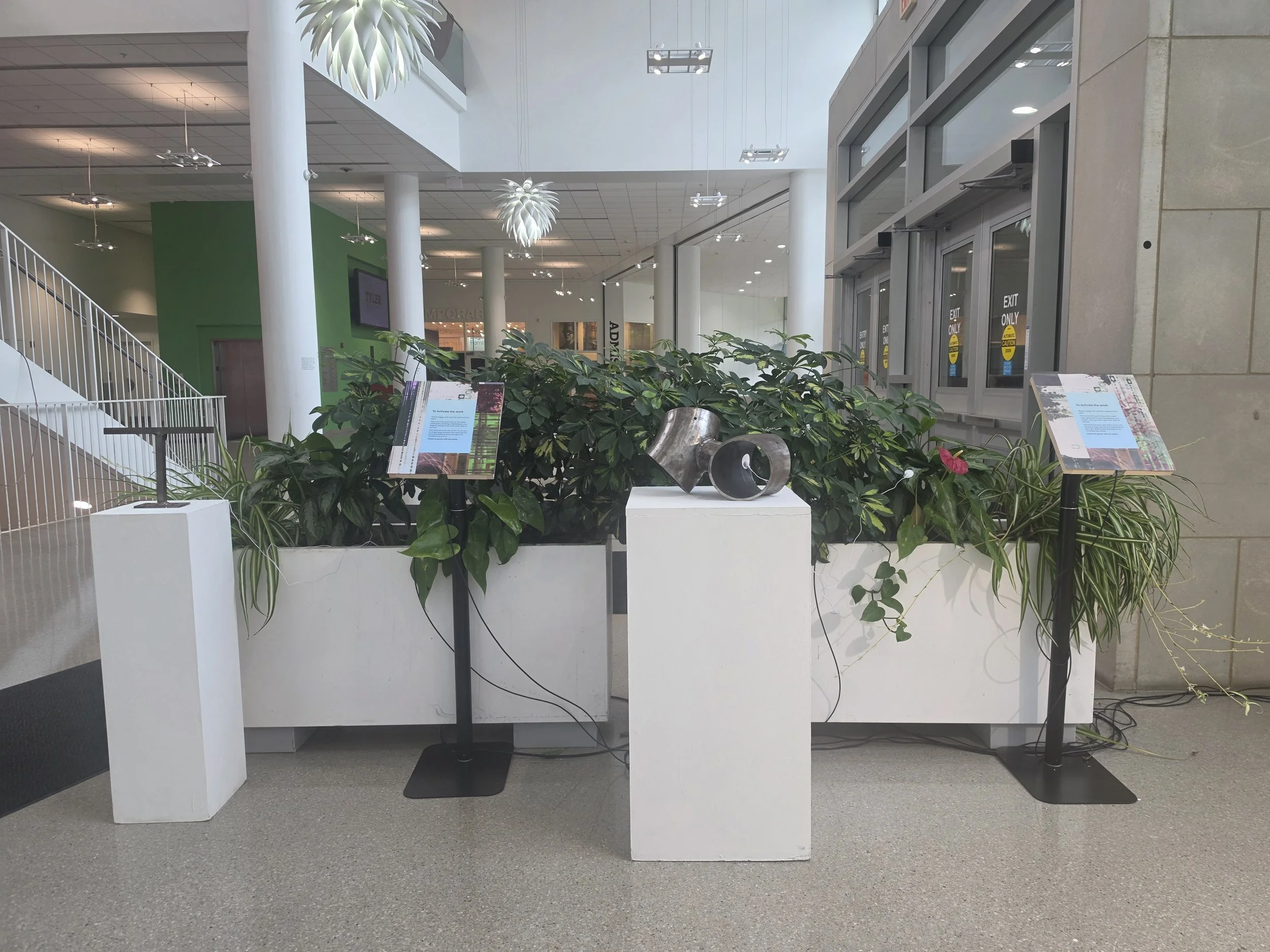
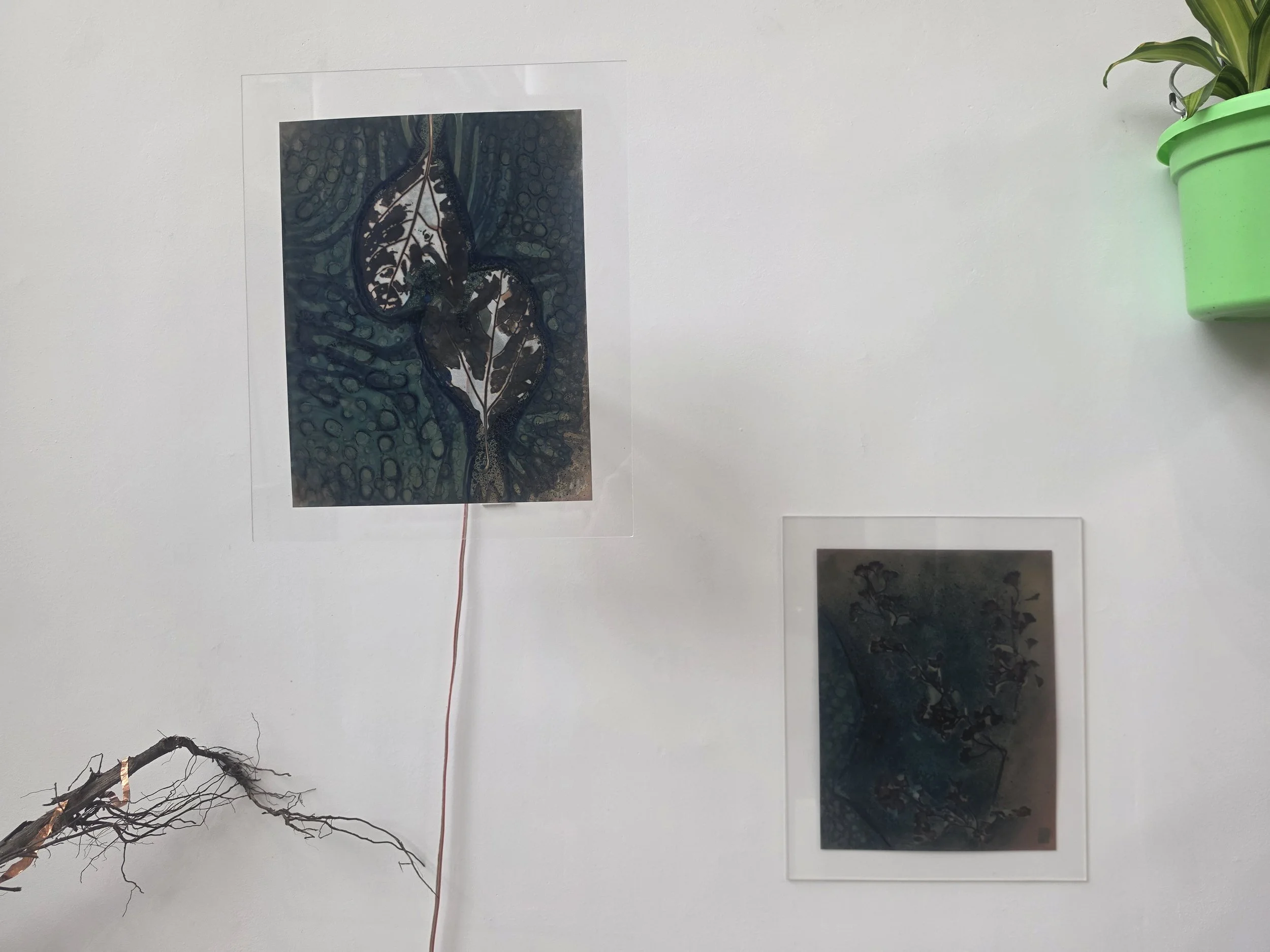
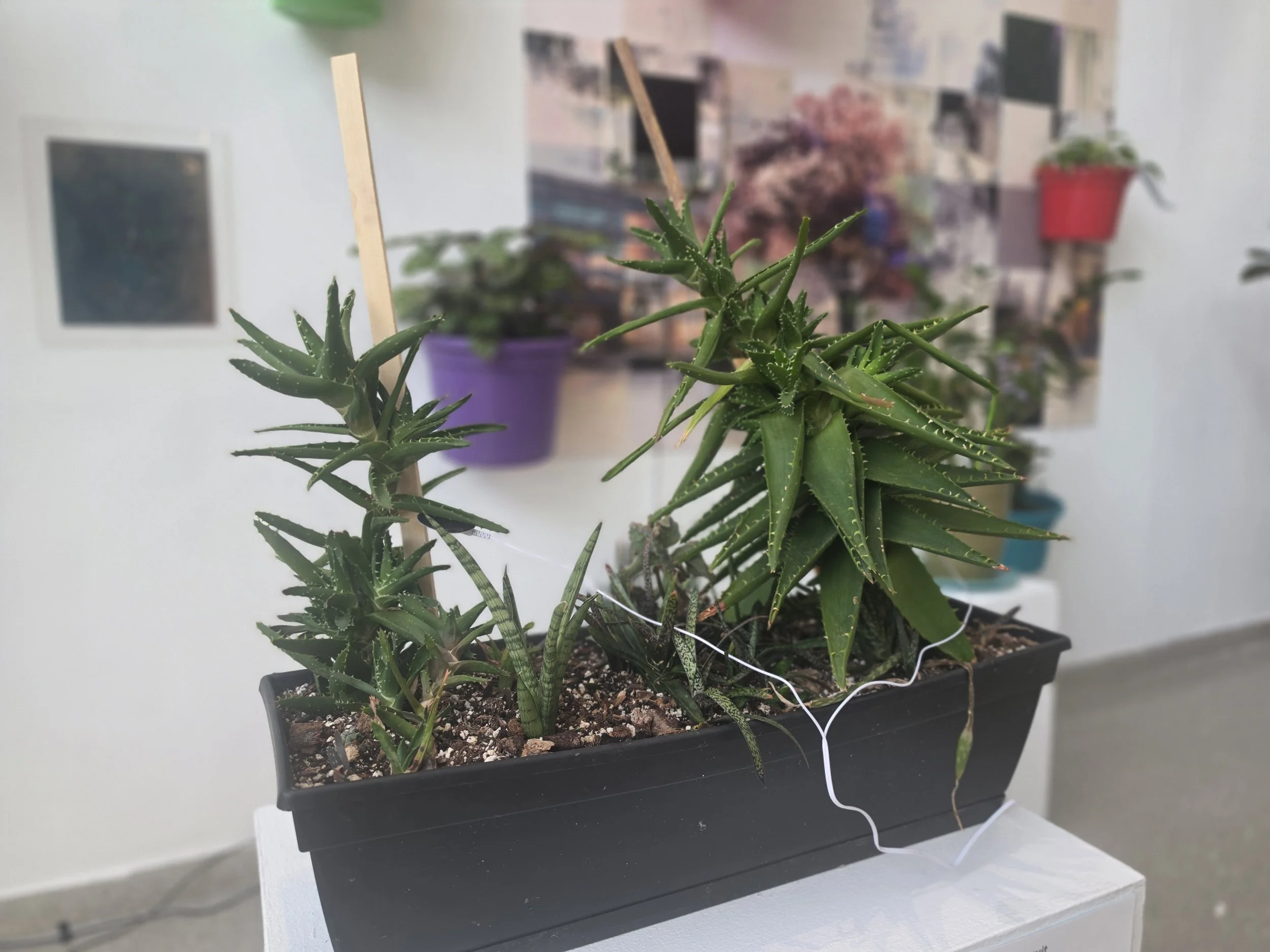
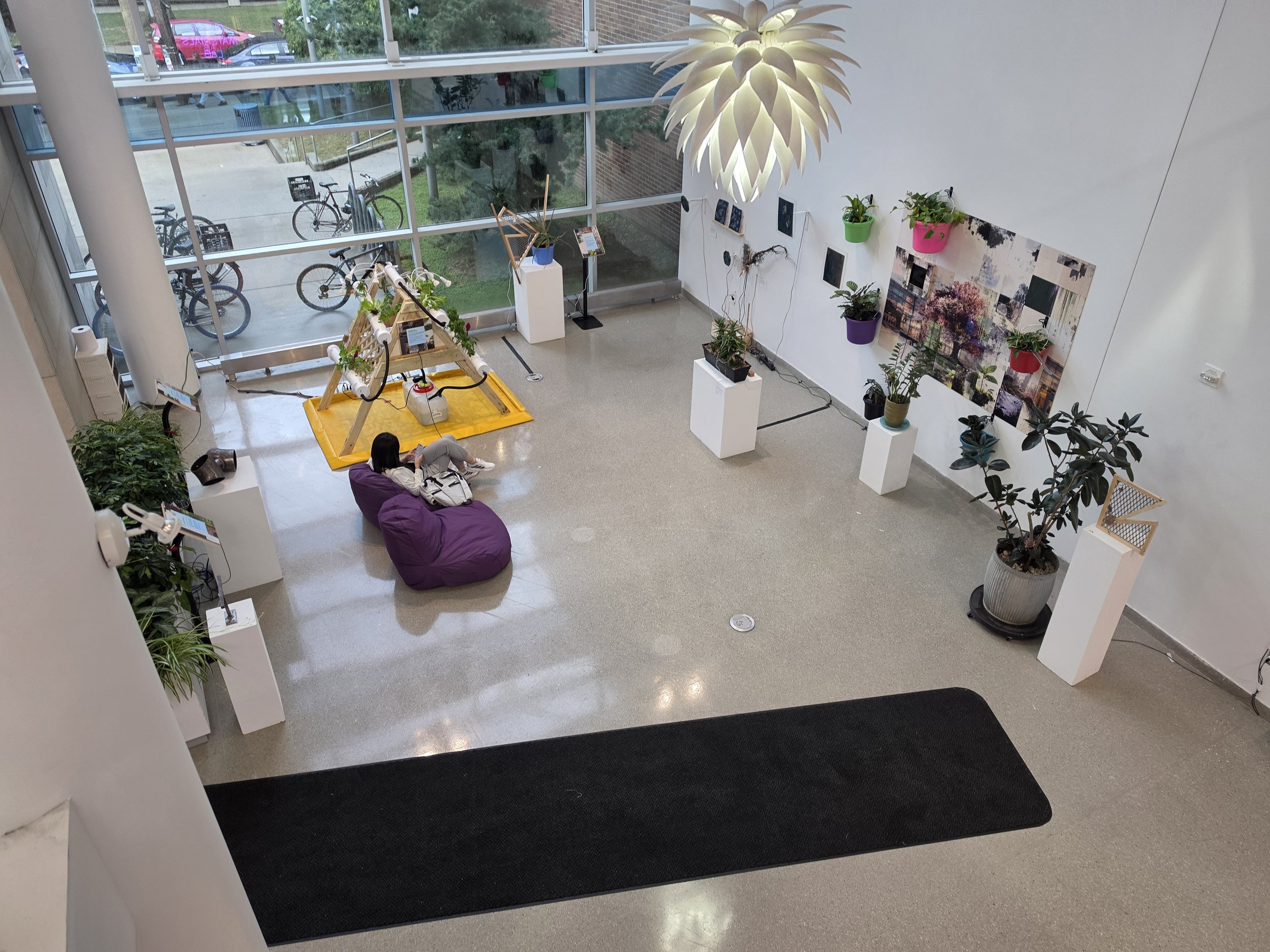
Photo Credits: Amara Johnson and Erin Boyle
Essay written by: Erin Boyle with input from Laurie Beck Peterson and Sandra James