

The Transnational Connection of "Birds and Flowers"
Celesty Eng | Art History 2026
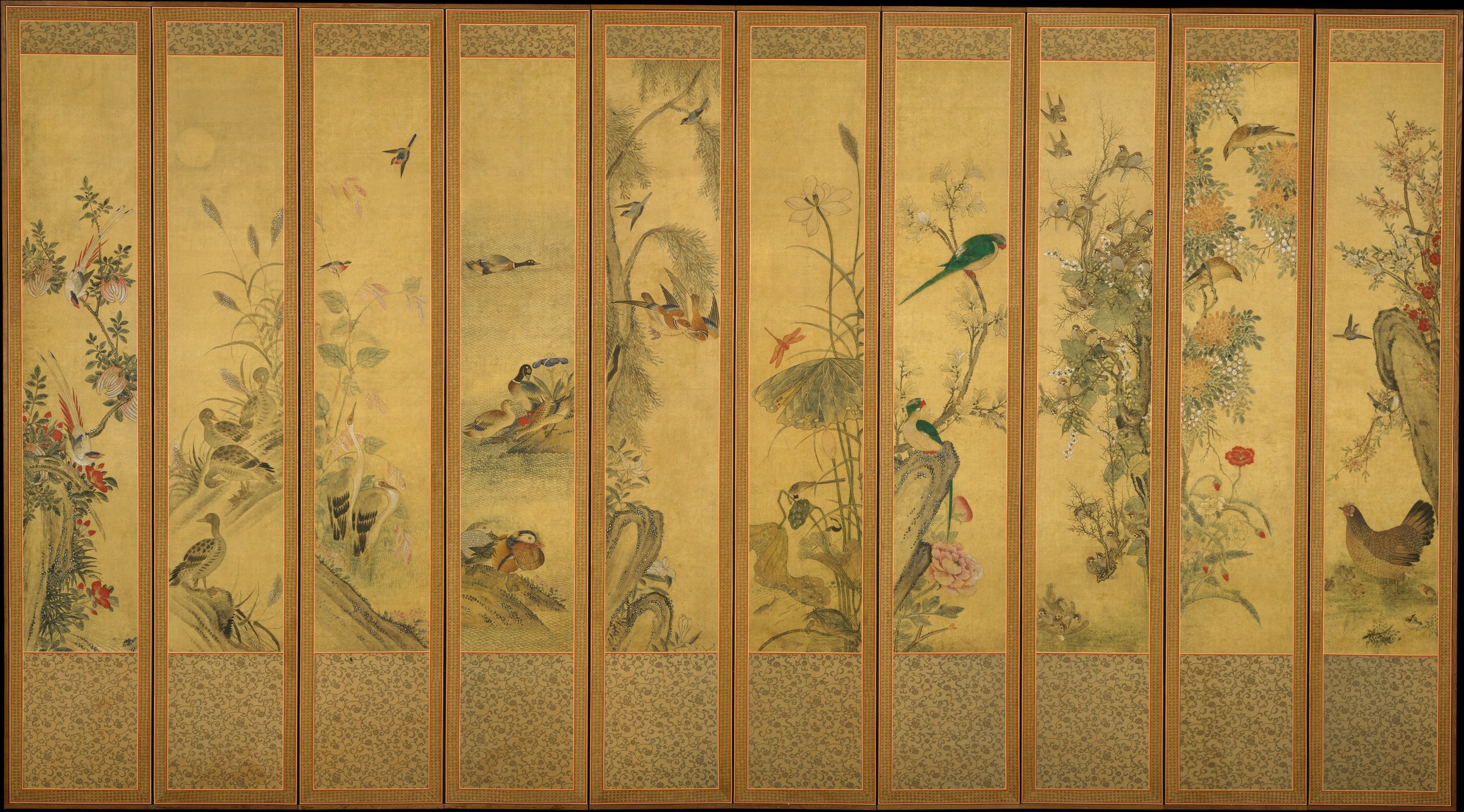
Unidentified Artist, Birds and Flowers, late 19th - early 20th century, Ten-panel folding screen; Ink and Color on Silk. Image (each panel): 54 3/8 x 10 3/8 in.
The genre painting known as “bird and flower” was popularized in the 10th century by the Song Dynasty. In China, the genre painting is known as “huaniaohua” or “hwajohwa” in Korea. As a motif, the symbols of creature and plant not only continue to evolve but retain relevance even up to the late 20th century in many Asian regions. Though originating in China, the relationship visualized by the interactions between creature and flower has taken a variety of cultural and social nuances, taking spaces within different settings, especially within Korea and Japan.
The intended purpose of “huaniaohua” was originally inspired by the thematic resilience and beauty of flowers and birds found within nature in an interpretive style assembled by the artist to convey a variety of symbolic meanings and emotions. This form of art was often paired with Chinese calligraphy and poetry to add deeper spiritual meanings. Bird and flower genre painting made its way to Korea and Japan during the 14th century, drawing strong influences and tutelage from Chinese artists where these motifs eventually evolved into other forms of art and distinction in style. The style of bird and flower subjects were favored by not just the elite and wealthy, but amongst common folk as well, as depicted commonly in Korean folk art, minhwa.
Rather than treating this genre as a static tradition, these works demonstrate how artists adapted shared visual conventions to reflect changing relationships between observation, symbolism, and modernity. Across these paintings, flora and fauna such as peonies, butterflies, birds, insects, and domestic animals, operate not only as decorative motifs but as carriers of layered meaning tied to seasonality, status, ephemerality, and sensory experience.
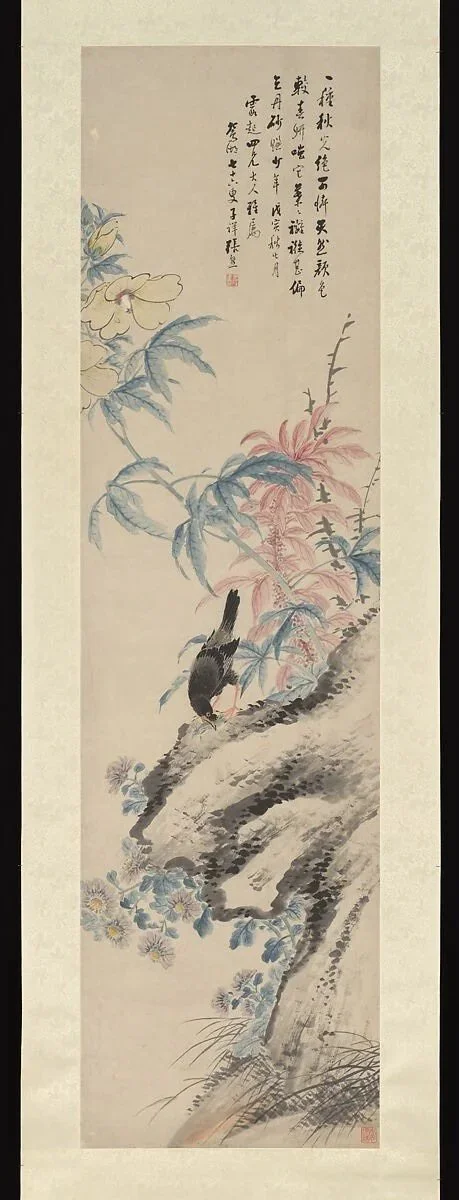
Zhang Xiong, Flower and Bird, 1878, Hanging scroll; Ink and Color on Paper. 57 1/4 x 15 9/16 in.
In Flower and Bird, Zhang Xiong reinterprets the traditional bird-and-flower genre through a more expressive and individualized brush style associated with late Qing literati painting. Rather than emphasizing meticulous naturalism, Zhang prioritizes spontaneity and energy, using loose, calligraphic strokes to suggest the vitality of both the bird and surrounding plant forms. The bird appears animated, almost caught mid-motion, while the flowers are rendered with a rhythmic fluidity that blurs the boundary between observation and abstraction.
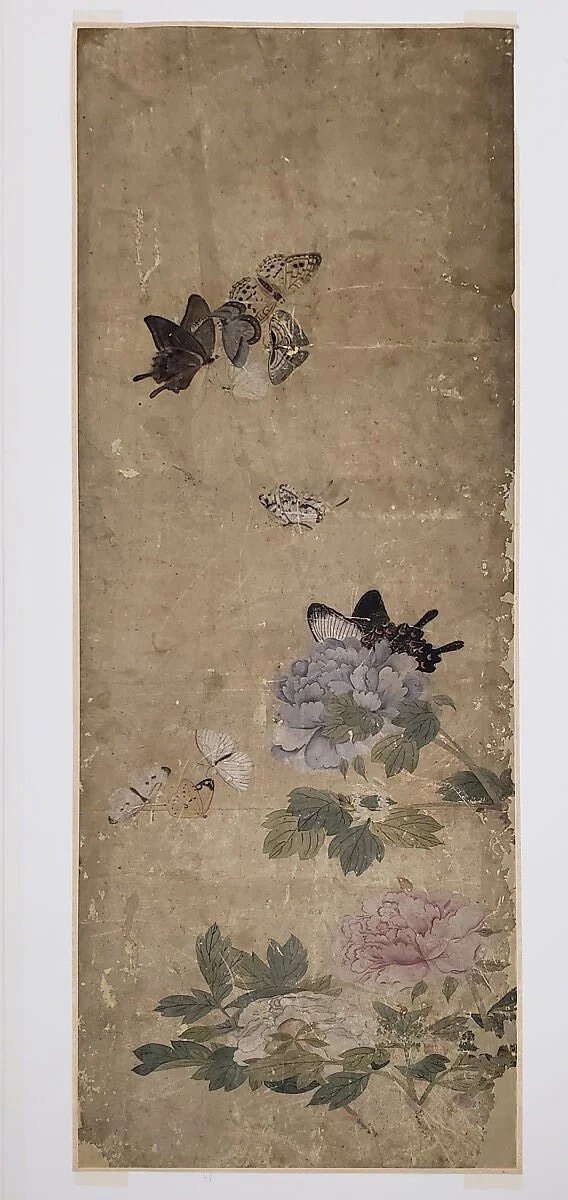
Attributed to Nam Gye-u, Butterflies and Peonies, mid to late 19th century, Ink and Color on Silk. 36 1/4 x 12 3/16 in.
In Butterflies and Peonies, Nam Gye-u demonstrates a refined balance between natural observation and decorative clarity. The composition centers on lush peony blossoms, rendered with controlled yet expressive brushwork, while butterflies hover dynamically across the surface. The peony, long associated with wealth and honor, anchors the painting symbolically, while the butterflies introduce movement and suggest ephemerality. Nam’s treatment of space is notably restrained, emphasizing clarity over atmospheric depth. This reflects the influence of earlier Chinese models while also aligning with distinctly Korean aesthetic preferences for order and elegance.
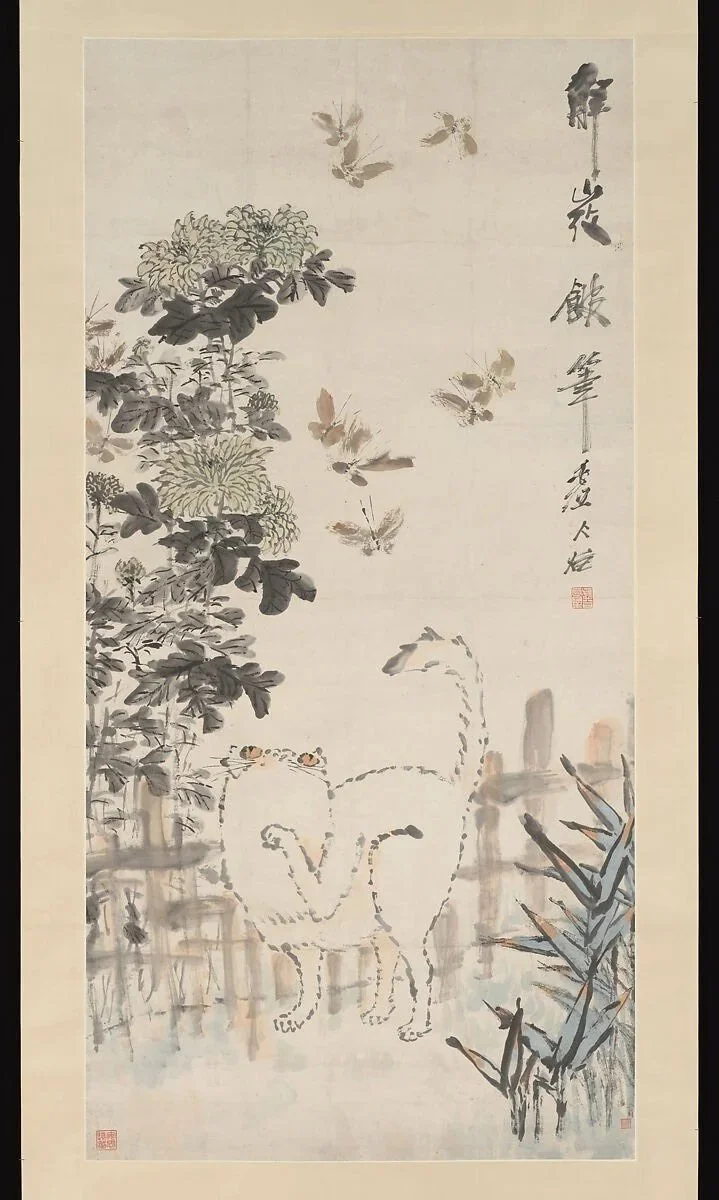
Zhu Huairen, Cat and Butterfly, 19th century, Hanging scroll; Ink and Color on Paper. Image: 52 3/4 × 25 3/4 in. Overall with mounting: 86 1/4 × 31 3/4 in. Overall with knobs: 86 1/4 in. × 35 5/8 in.
In Cat and Butterfly, Zhu Huairen introduces a subtle narrative tension into the bird-and-flower genre. The cat, poised and alert, directs its gaze toward the butterflies, creating a moment of suspended action. This interaction disrupts the otherwise harmony typical of the genre, emphasizing instinct, play, and predation. Zhu’s brushwork reinforces how Chinese artists expanded the expressive possibilities of the genre, incorporating narrative and emotional tension while maintaining its decorative and symbolic foundations.
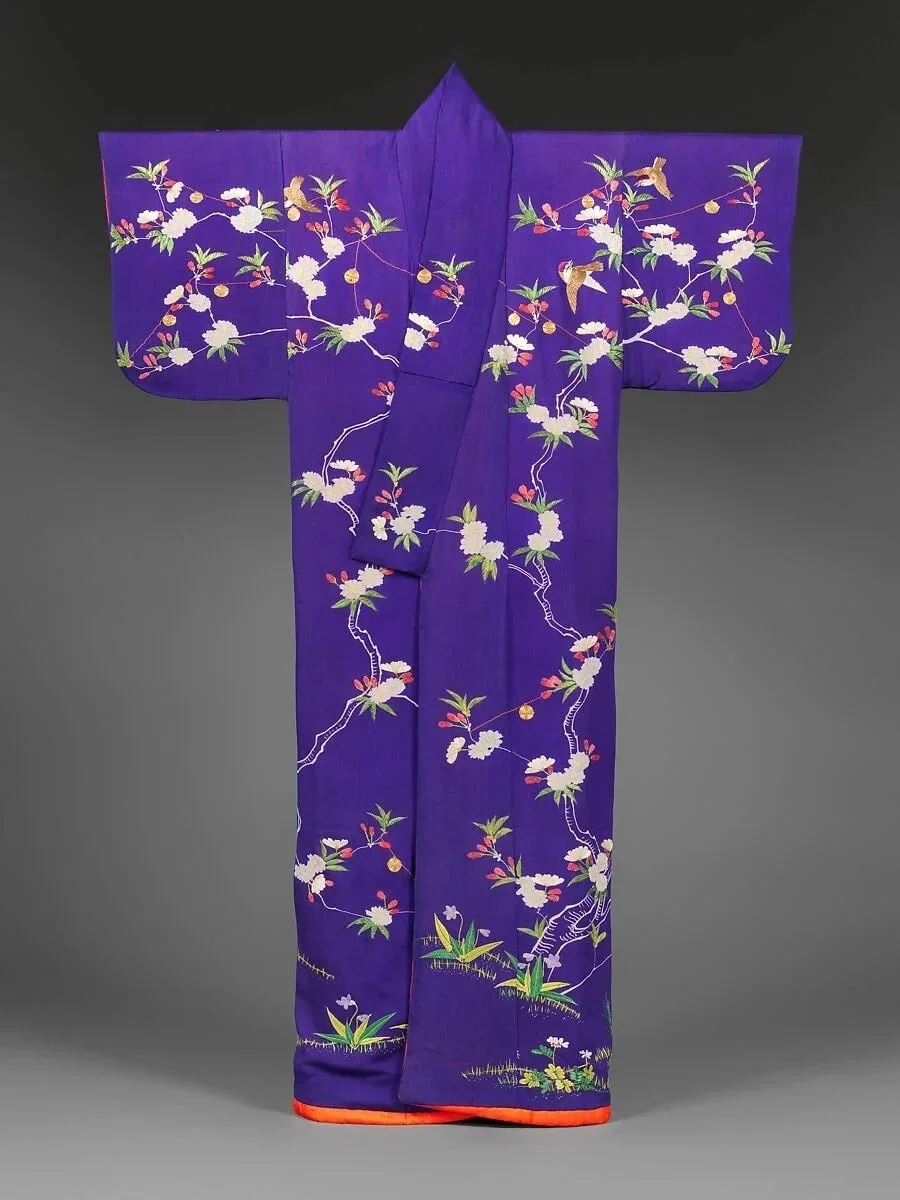
Court Lady’s Garment (Kosode) with Swallows and Bells on Blossoming Cherry Tree, mid-19th century, Silk crepe (chirimen) with silk embroidery and couched gold thread. 69 1/4 × 46 1/4 in.
This kosode translates the bird-and-flower tradition into the medium of textile, demonstrating how these motifs circulated beyond painting into everyday and ceremonial objects. Unlike painted compositions, the imagery here must respond to the contours of the body, integrating design with wearability. The asymmetrical arrangement and flowing lines guide the viewer’s eye across the garment, activating it in motion when worn. The functionality serves as a flexible visual language across media, adapting to new formats while maintaining symbolic resonance and aesthetic continuity.
Celesty Eng is a senior Art History major at Tyler School of Art and Architecture. She built her passion for art and history during her early days, influenced by her father’s love for drawing and talking about Chinese history. After realizing she could study two things she loved at once, she moved to Philadelphia to learn art history. Celesty aspires to find a career related to art where she can inspire everyone around her. Outside of her career, she can be found hanging out with her two cats, playing video games, or creating both digital and traditional art.
Instagram: @wys.03ce