

Blue Gold: Ultramarine and the Visual Language of Power in Early Modern Art
Jamie Gibson | Art History 2026
Once valued more than gold, ultramarine was not just a color. It is featured in many of the works we now call masterpieces, and is evidence of trade in the Early Modern world. Sourced from a lapis mine in Badakshan (modern-day Afghanistan) and traveling on the Silk Road, the extract from this rare stone became a pigment accessible only to noble patrons and their workshops, which regularly used it to create art. Due to its rarity and high price, this pigment was highly regarded. What happens when a color’s value starts to shape its meaning? In Persian manuscripts and in Italian altarpieces of the fourteenth through sixteenth centuries, ultramarine appears consistently in important places, such as cathedrals and imperial libraries. The pigment was used in multiple ways, sometimes highlighting a single figure, such as the Virgin Mary, and at other times functioning as a marker of celestial space. Though used in different ways throughout the world, a constant remained: ultramarine was often associated with powerful and divine figures in commissions for nobles. Looking closely at a small group of works from this period reveals how a material substance becomes a visual language, in which rarity is transformed into authority and color becomes a way of structuring power.
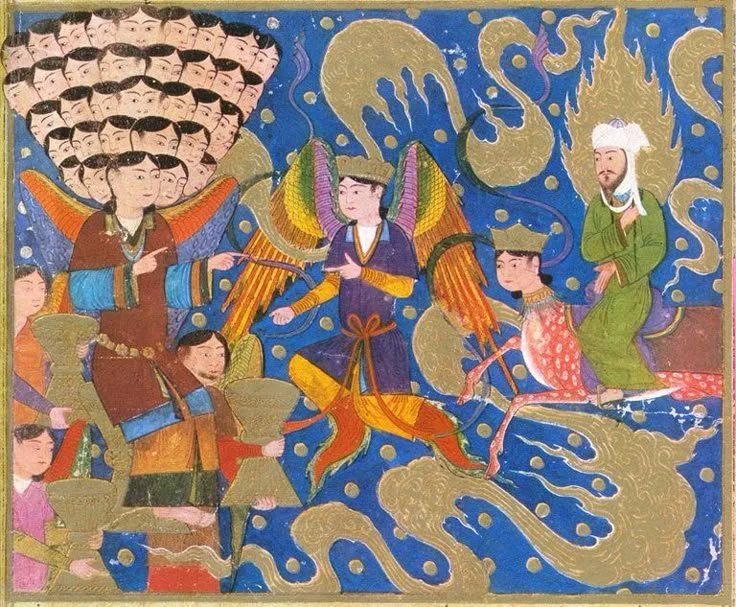
Untitled (Prophet Muhammad Encounters 70-Headed Angel), Unknown (Timurid workshop), c. 1436, ink, pigments, and gold on paper
Ultramarine is used extensively throughout the composition to create a vivid celestial environment that distinguishes the divine realm from the earthly world. The pigment contributes to an immersive spatial effect, surrounding the figures in a sacred atmosphere. This Timurid manuscript painting of the Prophet Muhammad’s ascension from the Mi’raj Nameh depicts Muhammad’s journey to heaven. This illustration includes Muhammad, the angel Jibreel, and a 70-headed angel. In this image, Prophet Muhammad and angel Jibreel encountered an angel with 70 heads, from whom Muhammad received 70 different praises. The presence of angels and the Prophet's elevated position emphasize his spiritual authority and connection to the divine. In this context, ultramarine functions as a visual marker of holiness, constructing the setting of heaven and his ascension into the afterlife.
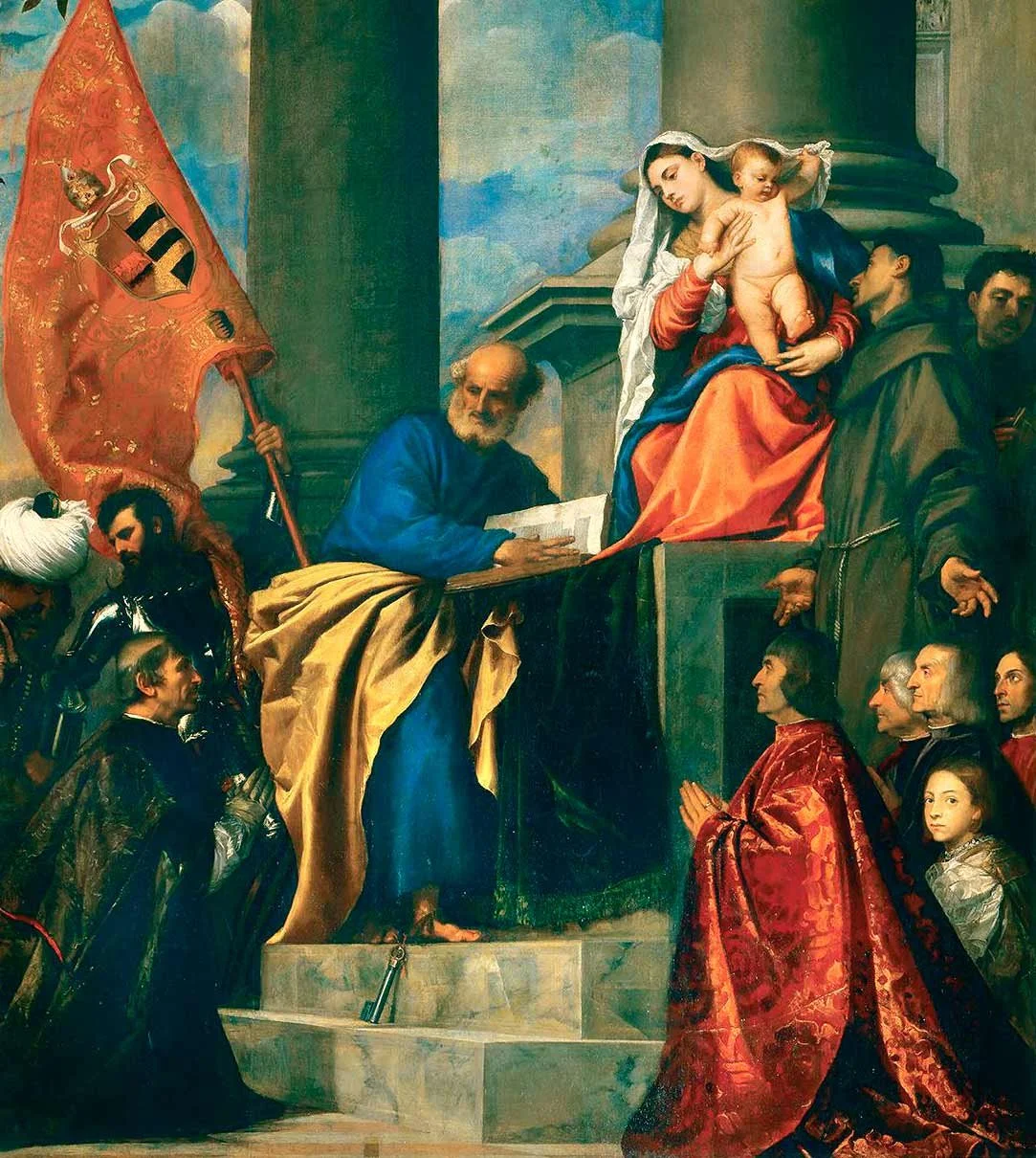
Pesaro Madonna, Titian, c. 1519–1526, Oil on Canvas
Titian's Pesaro Madonna was commissioned by Bishop Jacopo Pesaro for the Pesaro family Chapel in the Basilica dei Frari in Venice. This altarpiece is an example of the use of ultramarine in Venetian Renaissance settings. Mary and Saint Peter are painted in ultramarine robes, drawing the eyes straight to them and making it clear they hold the greatest importance among the other figures, including the Pesaro family. With ultramarine costing as much as gold, the pigment, especially its deeper washes, highlighted holy subjects, most often, Mary, highlighting their divine status and celestial ties through color alone. This image is interesting because even though the primary sacred figure in the painting is Mary, the ultramarine is primarily on the compositionally most central figure, Saint Peter. The way this painting mixes religion with influence and rank was intriguing because of the power conveyed by placing your family in a scene with Mary and Saint Peter for your own chapel in a basilica, further adding to the power associations with ultramarine, as well as the prestige of nobles and the art market at the time. In Venetian altarpieces, donors were rarely included in paintings. Ultramarine, therefore, operates on multiple levels, expressing both divine authority and worldly prestige.
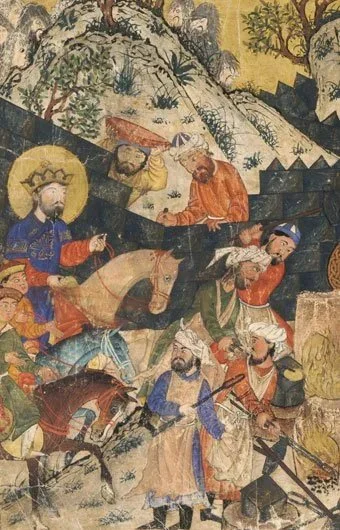
Iskandar Builds the Wall, Unknown (Ilkhanid workshop), c. 1325, Ink, Pigments, and gold on paper
In ‘Iskandar Builds the Wall’ from the Great Mongol Shahnameh, ultramarine is used across the composition on different figures. The pigment is primarily used on Iskandar or Alexander the Great. In the Quranic retelling of the story, replacing Duhl Quarnayn (the hero in the Quran story), Iskandar and his soldiers are shown building a wall between the Caucasus and Gog and Magog to protect those from the chaos of Gog and Magog. Ultramarine to mark Iskandar and his soldiers. Most of the blue being used for Iskandar, and one could assume the amount of ultramarine used from most to least, reveals the rank of those depicted in the illustration. Iskandar/Alexander the Great is often honored in Persian manuscripts. Ultramarine functions as a marker of authority, emphasizing Iskandar’s role as a powerful ruler responsible for maintaining order. Ultramarine was a very sticky pigment, hard to work with on paper, which is why it was used primarily on him.
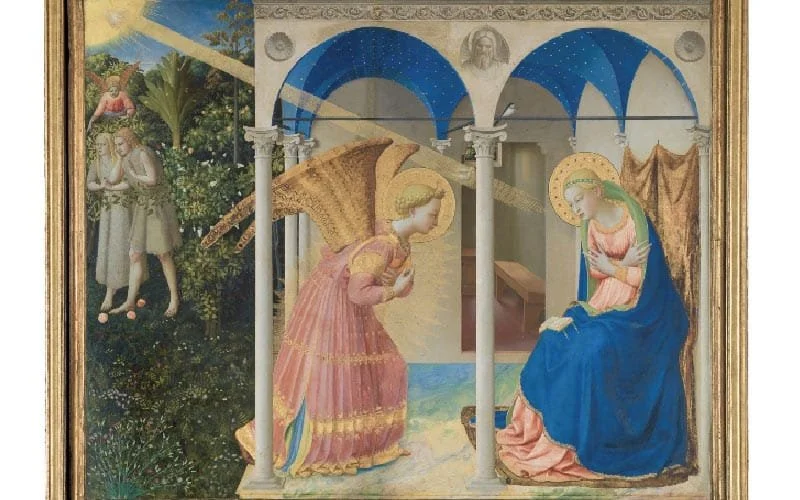
Annunciation, Fra Angelico, c. 1425–1430, Tempera on panel
In Fra Angelico’s Annunciation, ultramarine is the most prominent color, wrapping around Mary and the ceiling of the loggia where the scene is set. Her robe pulls the focus, and it is made clear that she is connected to the loggia ceiling, painted to represent heaven. Expensive beyond measure at the time, artists saved ultramarine for moments like this, where holiness needed visible weight. Value here isn’t only about cost; it speaks through silence too. Heavenly connections appear in blue, tying Mary directly to spiritual domains. Around her form, deep, rich ultramarine marks holiness within Catholic tradition. Such choices reveal deeper intent, such as the use of expensive pigments serving symbolic roles beyond mere status during the Renaissance. Fra Angelico was known for his use of this rich ultramarine, to the point that it is often referred to as “Fra Angelico Blue.” Because of that, this painting’s deep, vivid blue and heavy symbolism make it a prime example of how the pigment works within religious imagery.
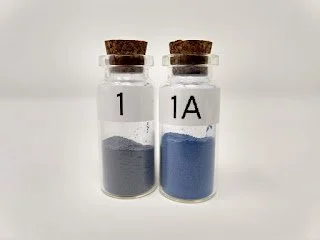
Untitled (Ground lapis lazuli and ultramarine), Fire Wing Crafts, 2019, Photograph
This image shifts the focus from finished artworks to the process of making ultramarine, showing how the pigment is transformed from raw lapis lazuli. Following methods described by the Italian painter Cennino Cennini in ‘Il Libro Dell’Arte.’ The lapis lazuli is ground, and the ultramarine is extracted through steps, including mixing the refined stone with wax, gum, and resin. I included this image to emphasize that ultramarine’s meaning is closely tied to its production. Its value came not only from the rarity of lapis lazuli but also from the labor-intensive and extensive process of refining it. The pigment's purity directly affected its texture and handling, making higher quality washes more difficult to work with. By comparing ground lapis with the extracted pigment shown here, the image highlights the transformation from raw material to luminous color. This process, as well as lapis lazuli’s rarity, helps explain why ultramarine carried such weight in painting, acting as both a material luxury and a marker of power.
Jamie is a senior art history major at Tyler, graduating in May 2026. She has interest in studying art and cultural objects from all time periods and geographic regions. She is interested in working in museums and cultural institutions post graduation. She is interested in working in textile/costume history and archives. She currently does archival work for her internship at Ulises Books. In her free time, she is probably watching a video on some non canonically significant historical event most people never learned about or with her cat.
Instagram: @jamiegibso