

The Transformation of the Vampire
Kelsey Tobin | Art History 2026
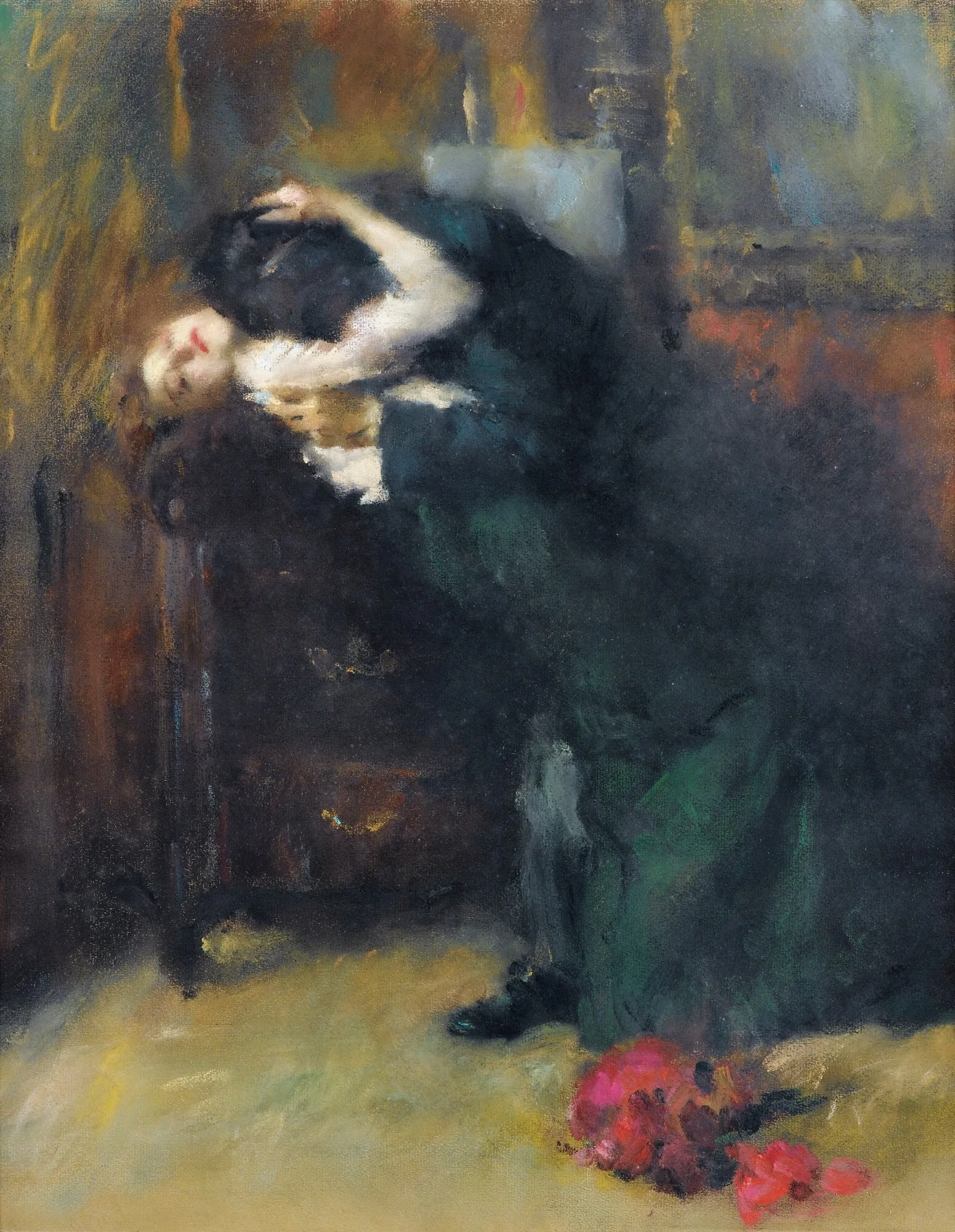
Antonio Ambrogio Alciati, The Kiss, c. 1917, Pastel on paper
Vampires have been a consistent entity in media throughout history. What we imagine today as the modern vampire has been carefully constructed wherein these creatures stood as physical manifestations of societal fears. Their imagery saw a significant resurrection during the gothic obsession of the Victorian era. Brought on by the vampire epidemic in Eastern Europe, where many succumbed suddenly to unexplained death, people had a genuine fear of vampires. This was subsequently brought over to Western Europe through immigration and war. It was at this point in history that depictions of vampires became humanized. It was not that their forms resembled man, but that their visage was more in line with signifiers of sophistication and modern civilization. No longer were they rotting corpses to stalk the night, but intelligent beings who charmed and seduced. This specific transformation reveals the later 18th century understanding that fear took a human form. It was not an amorphous and unknowable source, but the result of mankind.
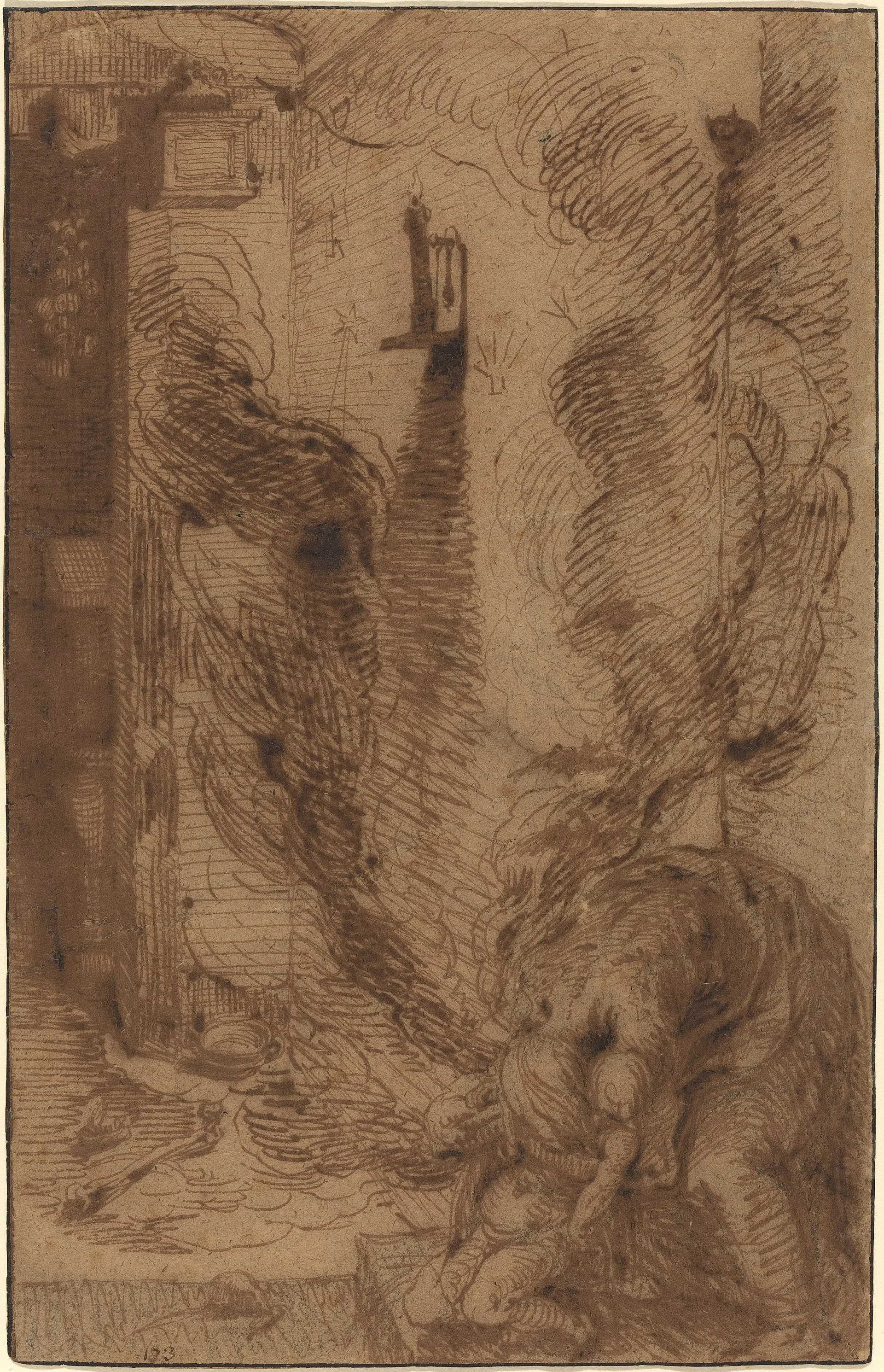
Jacques de Gheyn II, Witchcraft Scene with a Vampire [Recto], c. 1565-1629, Pen and brown iron gall ink over black chalk, 12 11/16 x 8 1/8 in.
Tucked in the lower right corner, lurks the vampire. While it certainly has the body of a human, it is depicted as devoid of any humanity. It is hunched over, nearly on all fours, as it feeds on an infant child. Its face is completely buried, hiding any last recognizable human characteristics. The hair drapes down, mottled skin peels, and tattered clothes hang low, the combination of these resembling a shaggy fur that covers the entire body. The vampire is animalistic. Early myths of vampiric creatures frequently included themes of, unfortunately common, child death, hence the young victim chosen. This print reflects the sentiment of vampires as unnatural and ruthless monsters beyond reason, because death was so unreasonable.
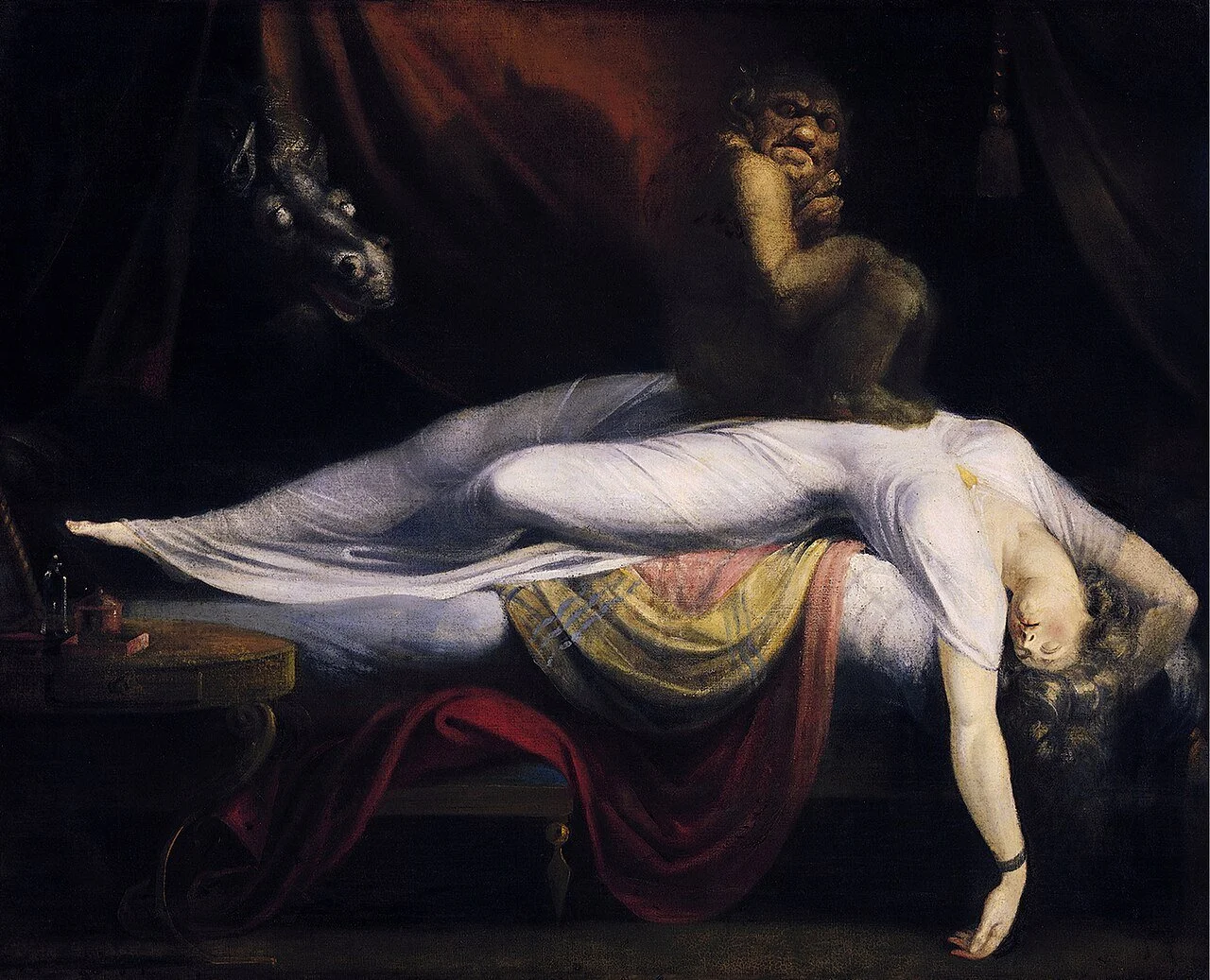
Henry Fuseli, The Nightmare, 1781, Oil on canvas, 40 × 50 in.
The frequency of the female form in vampiric depictions is purposeful. Women’s sexuality was a thing to be feared and shamed. They were both the victim and the predator, even simultaneously. The woman here is both a symbol of purity and lust under the control of a strange goblin. She is dressed in chaste white, though it clings to her body in a revealing way. Her pose is noticeably sensual, however, there is something highly unnatural about it. Her skin is pale and her head and arms hang uncomfortably. The sensuous, red drapery begins to appear more like flowing blood, the creature sitting on her chest becoming all the more villainous. This painting reveals the concerns over sexual diseases of the time while still relating them more to the unexplainable or mythic.
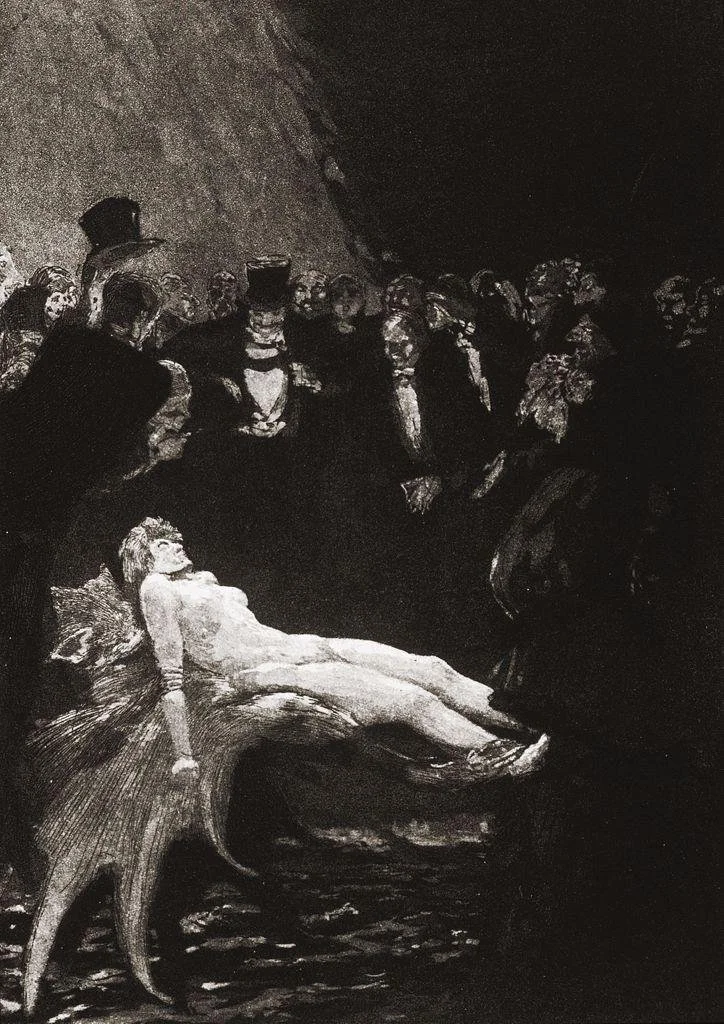
Max Klinger, Life: Caught, 1881, Etching and aquatint, 10 1/2 x 7 3/8 in.
As seen in the popularization of works like The Vampyre (1819), Carmilla (1872), and Dracula (1897), the vampire takes a marked turn. The threat has now integrated itself into polite society. Once again, the female body is used as a visual prop in this work. The giant bat cradling her is monstrous enough, but it is the crowd of men surrounding her that feels the most nefarious. Though it is meant to be a funeral scene, it appears as though the darkly dressed gentleman are closing in on her as she lies helpless. The myth was thoroughly circulated by this time as an allegory for syphilis, a disease not uncommon to the upper class. Those who could afford prostitutes and to cover up the diagnosis became the silent killers hiding in plain sight.
Vampires could be allegories for civilization at large as demonstrated by this print. The pairing of a gargoyle with a quasi-skyscraper creates a visual comparison of the insatiable desire for human innovation. The ever-hungry demon looms over the city and all the ills tangled within. As construction of monumental buildings pushes the city limits further and further, mankind's destruction of the natural world spreads. Black birds take flight as wary omens, as well as a reminder that their home has been replaced by concrete and brick. The stone sculpture is undoubtedly monstrous, though maybe it is not what the artist is referring to as the vampire.
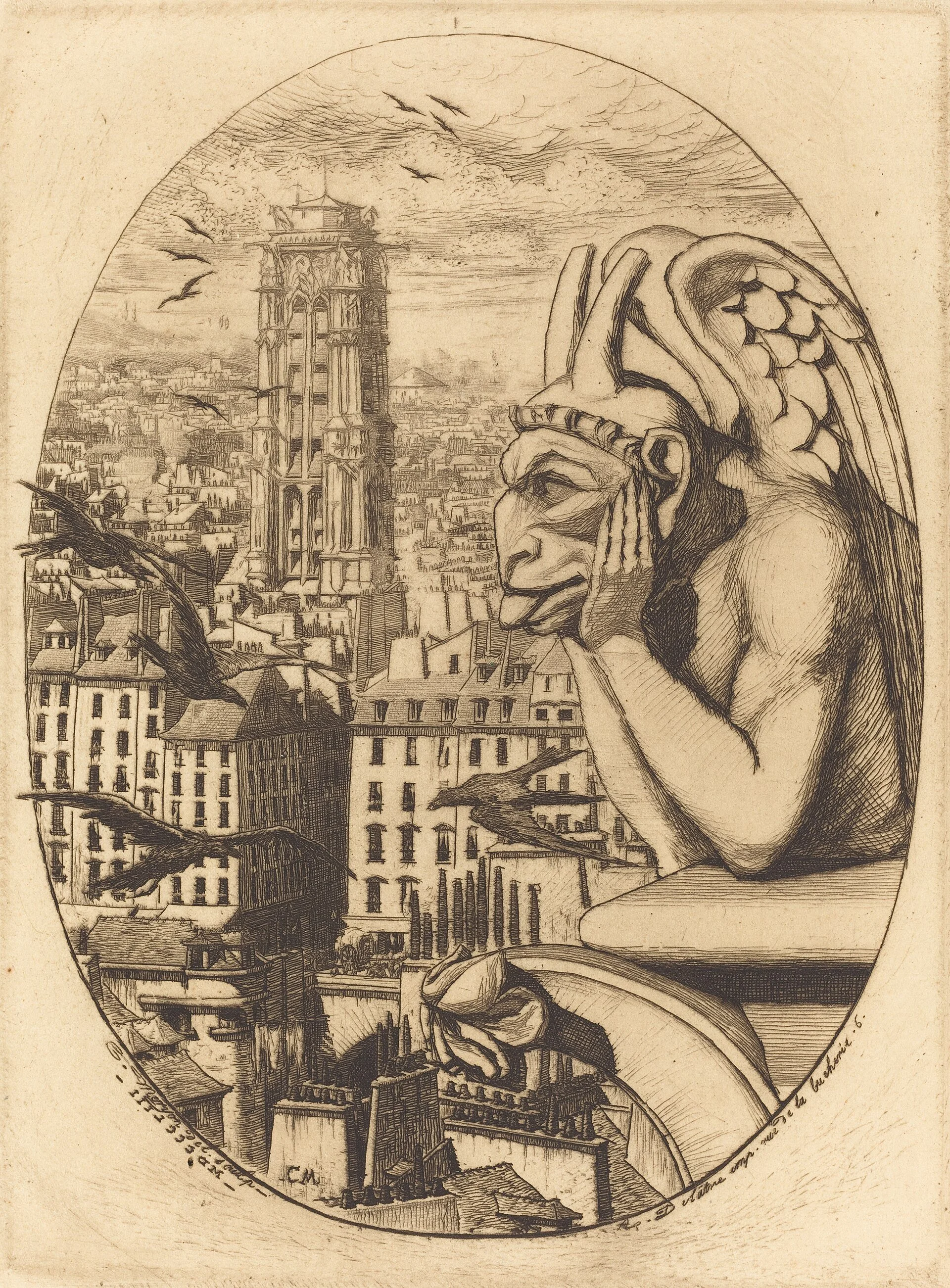
Charles Meryon, Le Stryge (The Vampire), 1853, Etching on green paper, 10 1/16 × 7 1/2 in.

Kelsey is a senior Art History major expecting to graduate in Fall '26. She grew up in the Greater Philadelphia Region and decided to transfer back home to Temple to finish her degree. Always in search of knowledge, Kelsey hopes that wherever her degree takes her she will continue to learn. Her wide-spanning interests will certainly provide ample opportunity. In her natural habitat, she can often be found cooking, drawing, watching movies, and spending time with her family.